.webp)
When clients pay for SEO tools, they pay for good outcomes and confidence.
But inside many agencies, delivery tells a different story. Data is stored in multiple places, and reports are sometimes stitched together.
And that turns client calls into a constant loop of explanations.
Weak white labeling makes results feel fragile, even when the work is solid. It also hurts retention and makes upsells harder than they should be.
White label SEO tools shape how clients experience your work. In 2026, they are part of your delivery system.
Branding, access, reporting, and workflows all exist in the same layer.
This guide breaks down what actually counts as a white label SEO tool today. We’ll cover the tools that work, the traps to avoid, and how to roll them out without slowing delivery.
Let’s get into it.
Pro Tip: Most agencies don’t lose clients because of bad work. The problem happens when the reporting creates doubt. Good white label SEO reports help avoid that.
TL;DR
If you want the short version, here it is:
- White label SEO tools help agencies control how clients experience SEO delivery by bringing branding, reporting, and workflows into one client-facing layer.
- In 2026, true white labeling requires branded reports, client portals, clear permissions, and reporting structures that scale with client volume.
- There is no single “best” tool for every agency. Platforms like SE Ranking, AgencyAnalytics, and Semrush tend to cover the most common agency needs, but the right choice always depends on how SEO is delivered and reported.
- Most agencies perform best with a focused stack: one white label reporting layer, one rank tracking solution, and one analysis tool. Adding more only makes sense when it supports a specific delivery model.
- The safest way to choose is to start from your delivery flow, shortlist a few tools, and test them with real client data before committing.
What Counts as a White Label SEO Tool in 2026?
White label SEO is about delivering SEO work under your own brand. That delivery often relies on tools. The problem is that many platforms fall short once clients actually interact with them.
In 2026, AI-powered search experiences are changing visibility and reporting needs, as Conductor points out in its State of Organic Marketing research.
That starts with branding: your domain, logo, colors, and templates. Clients should never feel like they’re logging into someone else’s tool.
It also means narrative control. Reports should use your language, not vendor terms. You decide what matters, what gets highlighted, and how results are explained.
Access matters too. Some clients want a portal. Others prefer scheduled reports or shared links.
A real white label tool supports these options without sacrificing consistency.
Let’s see how these tools work:
The Minimum Requirements For Client-Ready Delivery
There are a few things every white label SEO tool needs to get right.
- Brand control
This includes cover pages, headers, email sends, and exports.
- Permissions
Clients, account managers, and SEO leads should not see the same things. Clear roles prevent mistakes and awkward conversations.
- Multi-client management
You need folders or workspaces that stay organized as you scale.
- Automation basics
Scheduled delivery, saved templates, and simple audit trails reduce manual work and protect margins.
If a tool misses one of these, delivery starts to disintegrate as you grow.
Pro Tip: SEO audit services should fit into your delivery flow. When audits follow the same structure as your reports, the delivery stays clean.
What “Looks White Label” But Isn’t
This is where many agencies get stuck.
Some tools allow exports but keep vendor language inside the report. Others offer dashboards that overwhelm clients with raw data.
Limits are another common issue. Keyword caps, report limits, or API restrictions often push teams back into spreadsheets.
These setups might work with a handful of clients. But they don’t hold up at scale.
If a tool creates more manual work as you grow, it’s not truly white label.
Which Agency Use Cases Should Drive Your Tool Stack?
Most tool problems start with the wrong question.
Agencies ask, “What’s the best tool?” instead of “How do we deliver SEO?”
Your delivery model should drive your stack. Here’s how that plays out in practice:
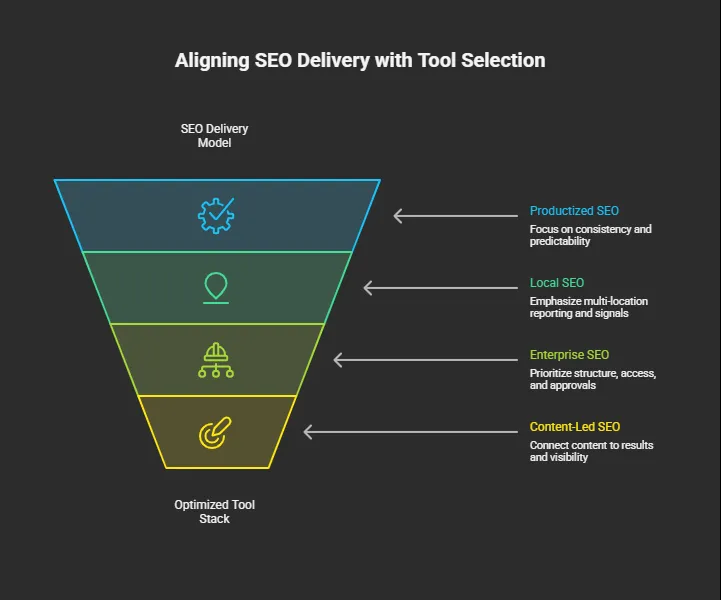
If You Sell Productized SEO
Productized SEO relies on consistency.
You need standard deliverables and repeatable reporting. White label tools should support fast setup and minimal customization per client.
Flexibility matters less than predictability. When every report follows the same structure, delivery stays efficient, and conversations stay focused.
If You Run Local SEO At Scale
Local SEO adds complexity.
Multi-location reporting, Google Business Profile signals, and review monitoring become core. Franchise and multi-branch clients expect clean rollups without extra effort.
White label tools for this model need strong local SEO support and clear segmentation. Without that, reporting turns into manual work.
If You Manage Enterprise Or Multi-Team Clients
Enterprise clients care about structure.
They expect role-based access, approvals, and consistent reporting across teams or regions. Reports often feed into QBRs and leadership updates.
Here, white label SEO tools act as a coordination layer. They keep data and messaging aligned without exposing internal workflows.
If Content-Led SEO Is Your Core Engine
Content-driven agencies need reporting that connects output to results.
Topic clusters, on-page work, and publishing cadence should tie directly to visibility and traffic changes. Reports should explain what was shipped and why it mattered.
When reporting reflects content strategy, client conversations will be grounded in priorities, and for agencies using AI to speed up content production, taking a step to humanize AI text before publishing keeps the output sounding natural and on-brand.
What Should You Look For in White Label SEO Tools?
A bad platform is usually not the issue. Agencies usually struggle because they picked one that didn’t match how they deliver SEO. That mismatch usually shows up months later.
So instead of chasing features, here’s how to evaluate white label SEO tools in a way that holds up:
Branding Depth
The logo in the corner is a necessity, but there is more to it.
A good white label tool lets you control the full surface area of delivery. That includes custom domains, branded emails, report covers, headers, and templates.
This matters because clients will judge professionalism subconsciously. And, when reports feel vendor-made, ownership can feel diluted.
When everything looks and sounds like your agency, client confidence goes up without you having to explain anything.
Reporting That Reduces Questions
Good reporting answers questions before they come up.
Look for tools that support executive summaries, annotations, and consistent comparisons. Month-over-month and baseline views should be easy to repeat, not rebuilt every time.
Also, check how flexible report templates really are:
Can you add context blocks? Notes? Commentary? Or are you stuck exporting charts and explaining them elsewhere?
If a report forces clients to interpret data on their own, you’re doing extra work later.
Data Coverage And Quality
Coverage matters, but clarity matters more.
Rank tracking should be transparent about methodology. Crawls should surface issues without overwhelming non-technical stakeholders.
Integrations with Google Analytics and Google Search Console need to be reliable.
And here’s the tradeoff many agencies miss: bigger databases don’t always mean better reporting. Sometimes they just mean more noise.
The goal is to show what helps explain performance.
Permissions, Collaboration, And Account Management
This is where tools either scale or fail.
You need clear roles for SEO leads, account managers, and clients. Clients should never see internal notes. Teams should never worry about crossing accounts.
Multi-client setups need structure. Workspaces, folders, or account hierarchies should be very obvious.
If permissions feel like an afterthought, delivery friction is guaranteed later.
The Agency Scorecard You Can Use To Compare Tools
When comparing options, a simple scorecard keeps things grounded. Rate each category from 0 to 5:
- White label depth.
- Reporting and scheduling.
- Client portal quality.
- Technical SEO coverage.
- Local SEO coverage.
- Content workflow support.
- Integrations and API access.
- Scalability across clients.
- Pricing predictability.
- Support and onboarding.
This shows you fit, and fit is what keeps stacks clean.
10 Best White Label SEO Tools For Agencies In 2026
Now we can talk tools.
There is no single “best” platform for every agency. Each option below works well for a specific delivery model. The key is knowing where each one fits and where it doesn’t.
To keep this useful, every tool follows the same structure: who it’s best for, where it shines, what workflows it supports, and what to watch out for.
Let’s start.
1. SE Ranking
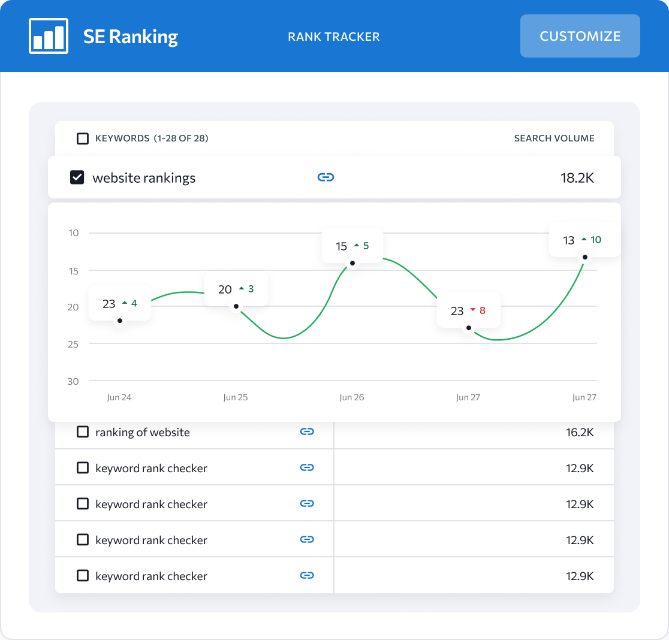
Best for: Agencies that want an all-in-one SEO platform with strong white label reporting at a competitive price.
SE Ranking combines rank tracking, SEO audits, backlink analysis, and reporting in one place.
Its white label setup includes client portals, automated reports, and custom domains. Once configured, delivery feels cohesive and easy to repeat across accounts.
Where it fits well is productized SEO and mid-sized agencies that need consistency without enterprise pricing.
That said, full white label features are only in higher-tier plans. Some agencies also report occasional data inconsistencies, especially in rank tracking.
And compared to platforms like Semrush or Ahrefs, the keyword and backlink databases are smaller.
It works best when you value workflow efficiency over raw data depth.
2. AgencyAnalytics
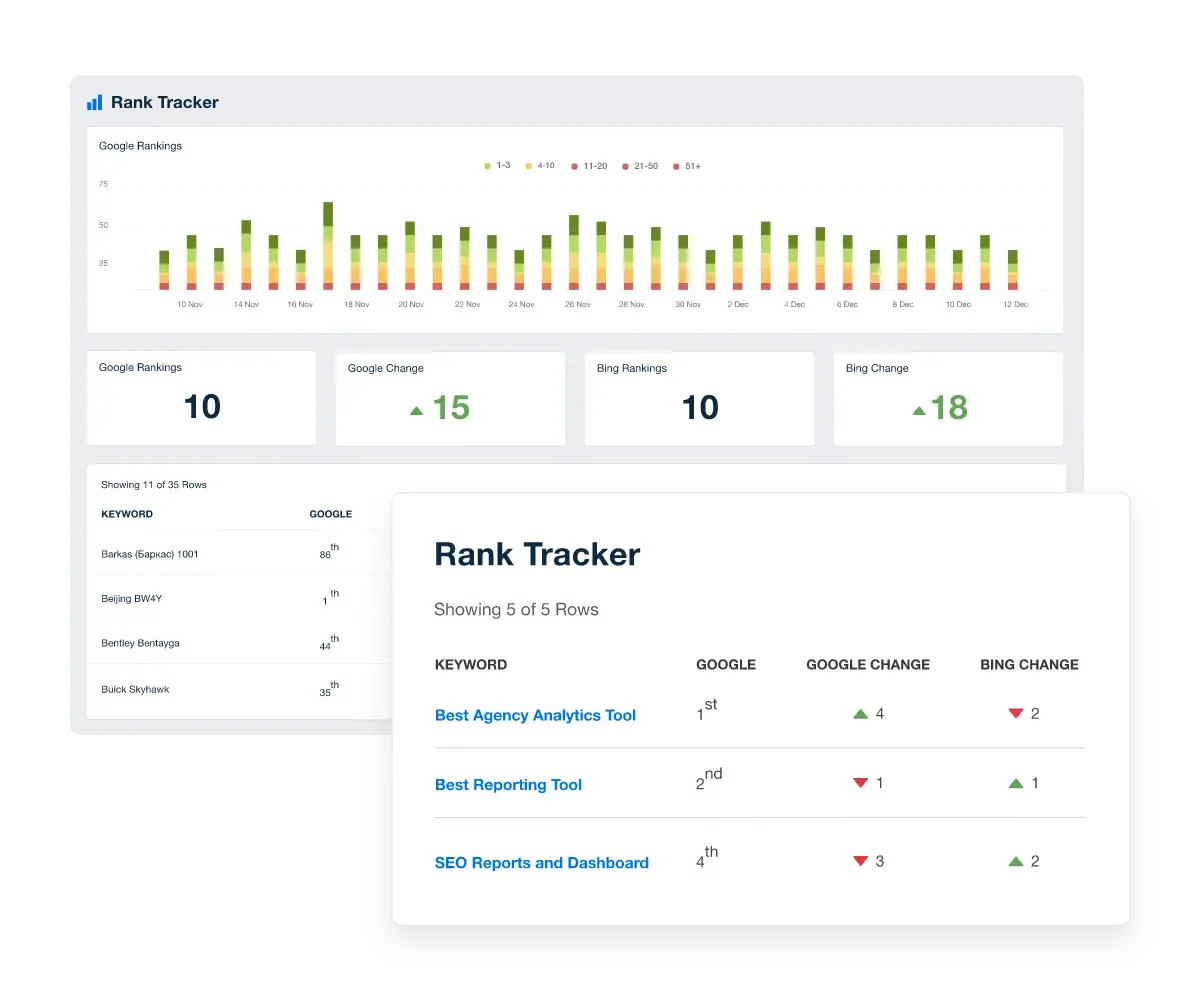
Best for: Agencies focused on reporting-heavy delivery across SEO, PPC, and other channels.
AgencyAnalytics is built around client reporting. It connects with more than 80 data sources, making it easy to unify SEO reporting with paid media, analytics, and social.
Branding is strong. Reports and dashboards can be customized with your logo, colors, and domain. Clients can access live dashboards or receive scheduled reports automatically.
This makes it a good fit for agencies that sell ongoing performance reporting and want clients to check results without constant calls.
The tradeoff shows up as you scale. Pricing is typically per client, so costs can rise quickly.
Some advanced visual customization is also limited compared to dedicated BI tools. And as with any multi-source platform, small data discrepancies can appear.
Still, for agencies where reporting is the product, it’s a solid choice.
3. Sitechecker
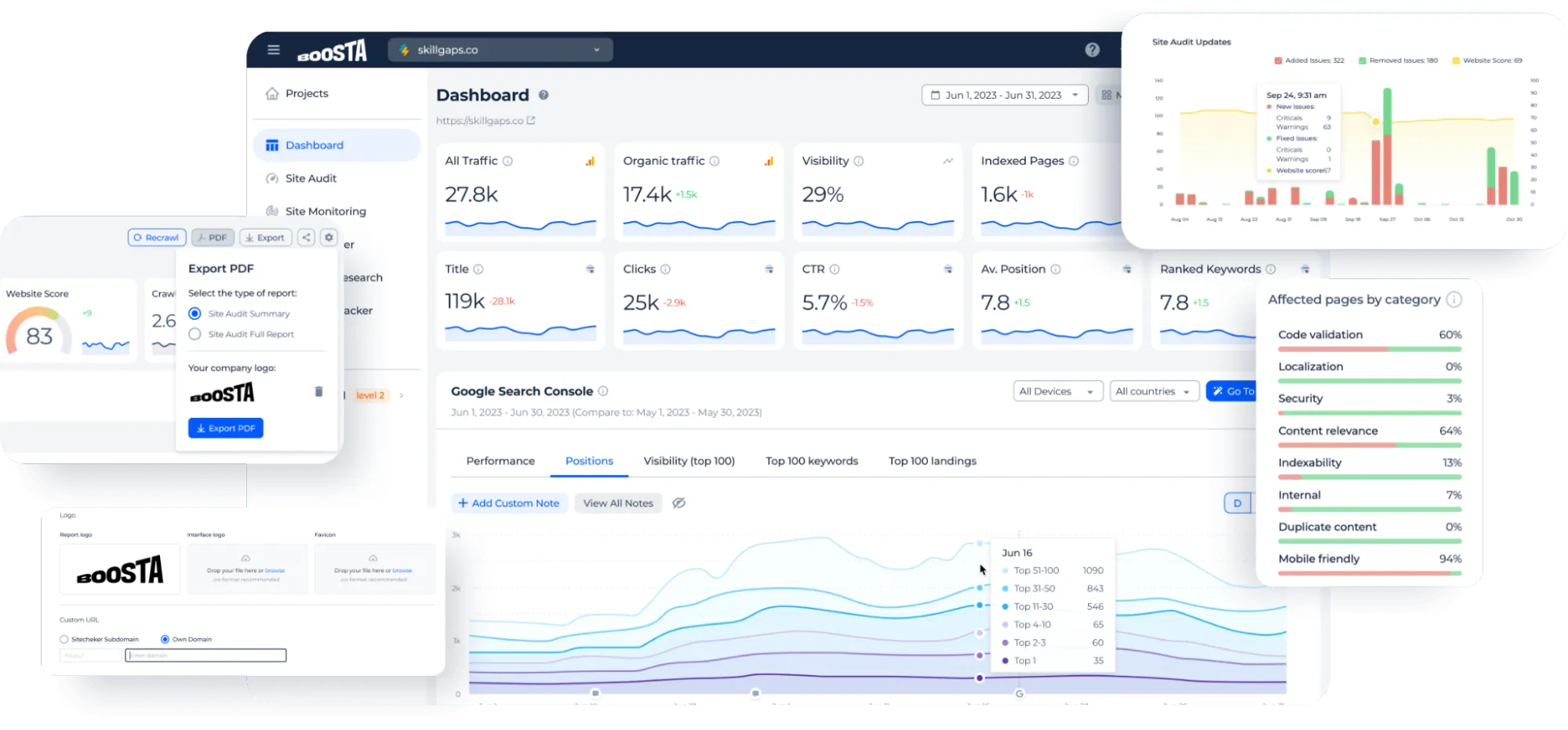
Best for: Small to mid-sized agencies that want intuitive SEO audits with white label reporting.
Sitechecker focuses on technical SEO and on-page monitoring. Its interface is clean and visual, which makes it easy for teams and clients to understand issues.
White label reports and dashboards are included, and setup doesn’t require much training. That makes it attractive for agencies that need to onboard clients quickly or those that work with less technical stakeholders.
Where it falls short is off-page depth. Backlink analysis and competitive research are lighter compared to top-tier tools. For larger agencies with complex needs, it can feel limited.
As a lightweight, client-friendly audit and monitoring tool, though, it does its job well.
4. DashThis
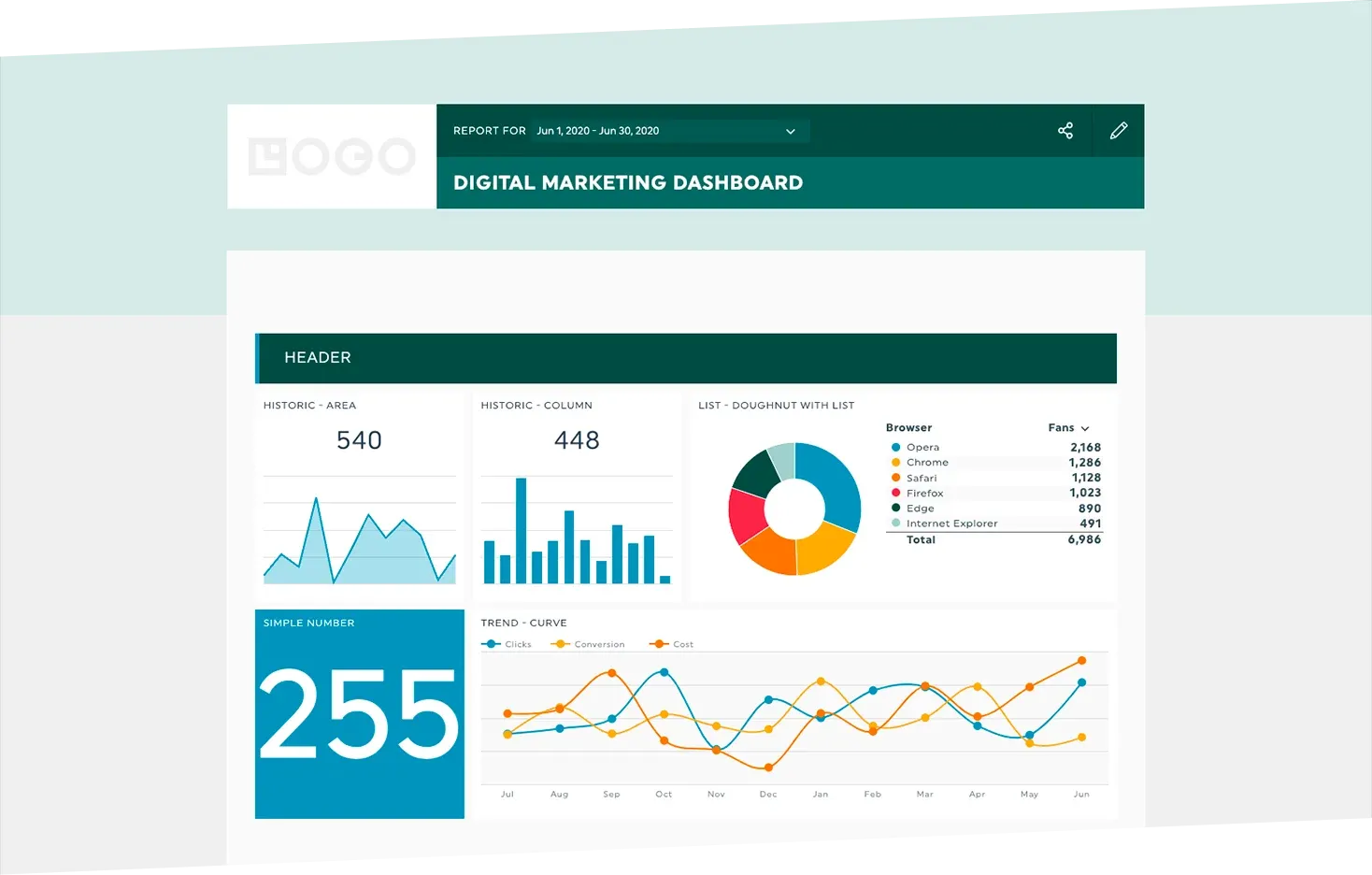
Best for: Agencies that need clean, client-ready SEO reporting without running a full SEO analysis inside the tool.
DashThis is a reporting and dashboard platform, not an SEO suite.
Its strength is presentation. You can build fully branded dashboards using your logo, colors, and domain, then automate delivery across clients. Setup is fast, and the interface is easy to navigate, even for non-technical teams.
This works well when you already have SEO data. Many agencies use DashThis as the final delivery layer, pulling data from rank trackers, analytics platforms, and crawlers.
The limitation is clear: DashThis does not do SEO work for you. No rank tracking, audits, or backlink analysis. Client permissions are also basic.
If you want one place to analyze SEO, this is not it. But if you want one place to present SEO clearly, it does that well.
5. Semrush (Agency Growth Kit)
Best for: Large agencies and enterprise teams that want depth, scale, and brandable reporting in one ecosystem.
Semrush is one of the most complete SEO platforms on the market. Keyword research, competitor analysis, backlinks, content, and PPC. It’s all there.
They offer Semrush One, which offers keyword-based SEO metrics and prompt-level AI search insights. That makes it possible to deliver branded reports while keeping all analysis inside Semrush.
This setup works well for complex accounts and multi-team environments. In fact, 56% of SEO professionals use Semrush as their main competitor tracking tool, according to Digital World Institute.
The tradeoff is cost and complexity. For smaller agencies, pricing can outpace margins quickly. Semrush fits best when you need depth and already have processes in place to manage it.
6. Ahrefs
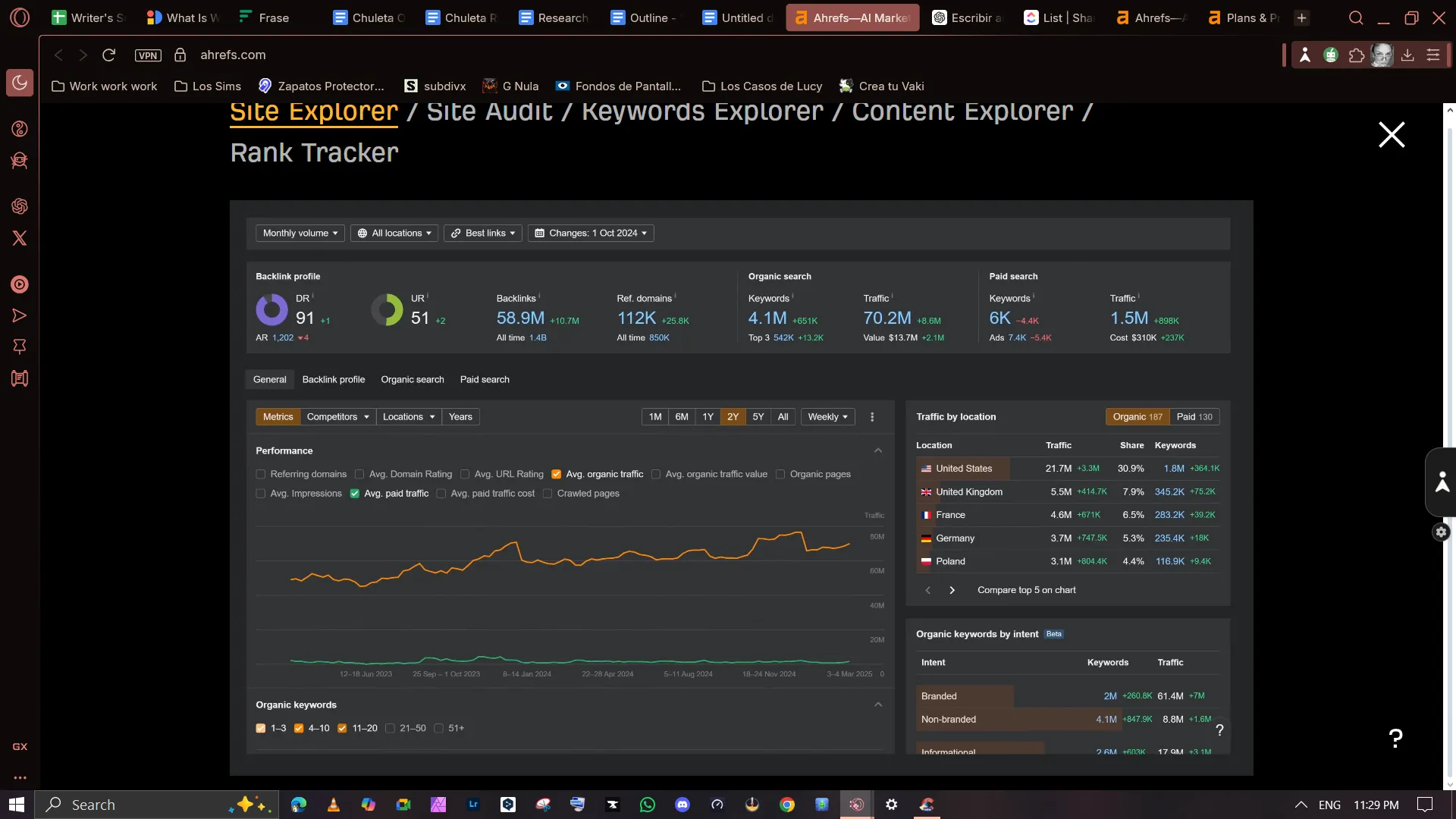
Best for: Agencies that prioritize backlink analysis and competitive research, with reporting handled elsewhere.
Ahrefs is widely trusted for link data and competitive insights. Its database is large, and its metrics are considered reliable.
That’s why 82% of SEO professionals say Ahrefs is part of their weekly routine, as the same Digital World Institute data shows.
Where Ahrefs falls short is white label delivery. It’s not designed as a client-facing reporting tool.
Branding typically occurs through exported PDFs or by integrating data into another reporting platform.
For agencies, Ahrefs often plays a supporting role. It feeds analysis into a separate white label reporting layer.
If you expect clients to log into a branded portal, Ahrefs alone won’t get you there. If you want strong data behind your recommendations, it’s still hard to replace.
7. Serpstat
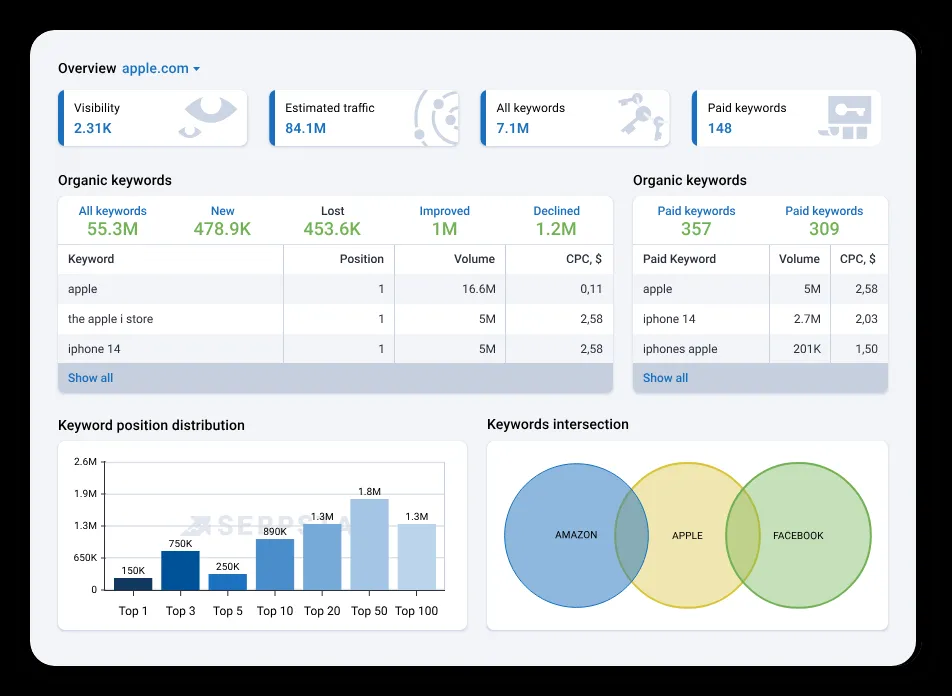
Best for: Budget-conscious agencies that want all-in-one SEO with basic white label capabilities.
Serpstat offers rank tracking, audits, and reporting at a lower price point than most premium platforms. White label reports are available, making them usable for client delivery.
It’s attractive for agencies managing many smaller accounts or operating in competitive pricing environments.
The limitation shows up in depth. Data coverage is thinner than that of Semrush or Ahrefs, and some advanced features feel basic.
Still, when margins matter and expectations are clear, Serpstat can support consistent delivery without overextending costs.
8. SpyFu
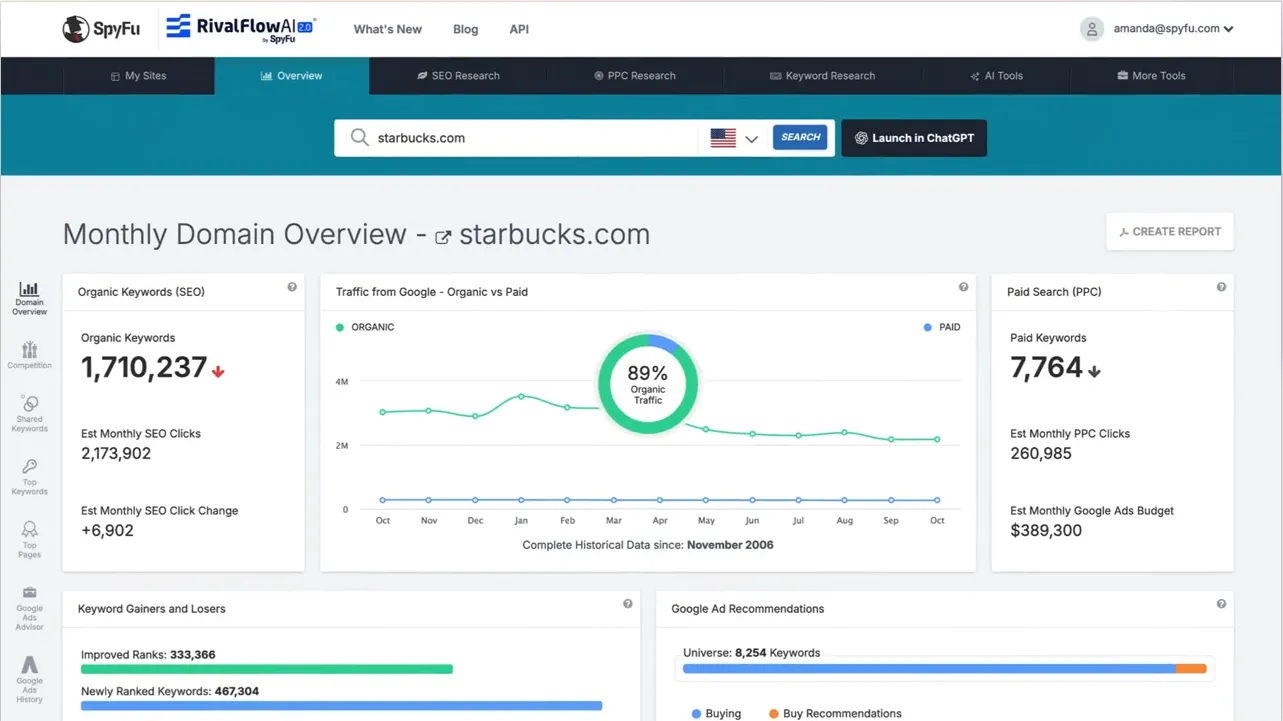
Best for: Agencies focused on competitor analysis and PPC-driven SEO strategies.
SpyFu shines in competitive intelligence. It’s particularly strong for analyzing paid and organic overlap, historical ad data, and competitor positioning.
White label reporting is available for these insights, which makes it useful for agencies selling competitive audits or PPC plus SEO services.
On the other hand, technical SEO coverage is limited. Deep audits and complex reporting workflows are not its strength.
SpyFu works best as a specialized tool, not a central delivery platform.
9. Mangools
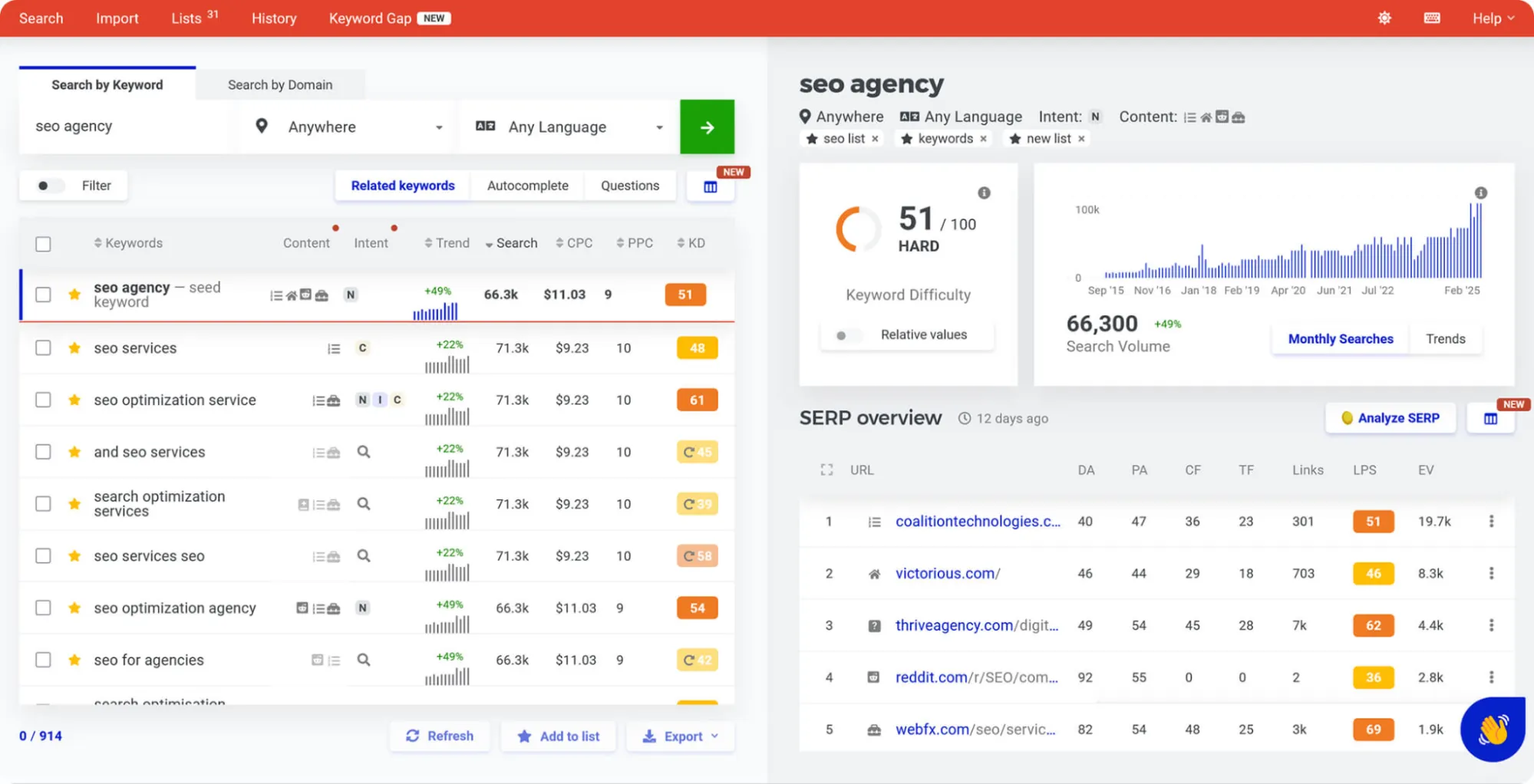
Best for: Freelancers and small teams that want simplicity and low friction.
Mangools is known for its clean interface and low learning curve. It covers rank tracking, keyword research, and SERP analysis.
White label options exist but are basic. For agencies with high client volumes or complex reporting needs, it may feel restrictive.
Where it fits is early-stage agencies or solo operators who want to deliver clear reports without heavy setup.
10. WebCEO
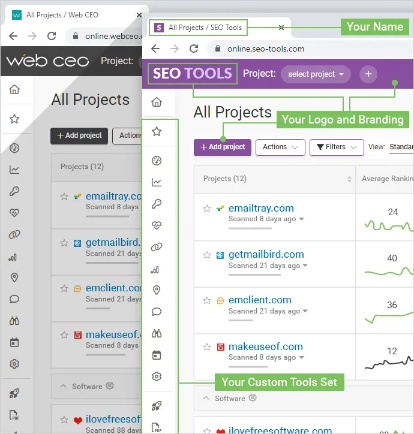
Best for: Agencies and SEO resellers that want a full SEO suite with built-in branding.
WebCEO offers rank tracking, technical SEO, and white label reporting designed specifically for agencies. Branding options are solid, and the platform supports multi-client management well.
Compared to newer tools, the interface can feel dated. Some advanced features also lag behind premium competitors.
That said, for agencies focused on reselling SEO services with clear reporting and structured workflows, WebCEO remains a practical option.
Pro Tip: It’s normal to rely on more than one tool. Many agencies combine white label tools with other SaaS SEO tools to cover specific needs and keep reporting consistent.
How To Choose The Right White Label SEO Tools
After reviewing these tools, one thing is clear: there is no single “best” platform. Every option makes tradeoffs between depth, flexibility, and cost.
The smartest move is to choose based on how you deliver SEO.
If reporting is central to your service, prioritize tools built for client delivery. If execution matters more, focus on platforms that keep analysis and reporting connected without overwhelming clients. And if margins are tight, predictable pricing matters more than feature lists.
This is why many agencies use more than one platform.
Digital World Institute also reports that 84% of enterprise teams rely on three or more premium SEO tools.
Start with your delivery model. Map the reports you promise clients. And then test the tools with real accounts. That approach keeps the stack clean and the decisions simple.
Pro Tip: Tools help, but staying informed matters just as much. Following a few reliable SEO blogs makes it easier to understand shifts in search and explain results clearly in your reports.
Choosing the Best White Label SEO Tool for Your Agency
White label SEO tools shape how clients experience your work.
The right tools make reporting clearer, conversations shorter, and expectations easier to manage.
Start with how your agency delivers SEO. Then choose tools that support that flow instead of forcing new processes on your team.
If your current setup feels heavier as you grow, that’s usually a sign the delivery layer needs work.
At Bluethings, we help agencies evaluate, select, and roll out white label SEO tools that fit their delivery model. If you want a better SEO delivery and want to make reporting easier to manage, let’s talk!
FAQs
What Are White Label SEO Tools, and How Do They Work?
White label SEO tools are platforms agencies use to deliver search engine optimization work under their own brand. They pull SEO data such as keyword rankings, organic traffic, website audits, and backlink profiles, then present it through white-label SEO reports, client dashboards, or client portals. From the client’s point of view, everything looks agency-owned.
What Is The Difference Between White Label And Regular SEO Tools?
Regular SEO tools focus on internal SEO analysis. They help teams run website audits, track SERP features, analyze backlink profiles, or review keyword analysis. White label SEO tools are built for delivery. They emphasize white label reporting, automated reports, branding control, and client access so agencies can explain performance clearly.
Which Are The Best White Label SEO Tools Available In The Market?
The best white label SEO tools depend on how an agency delivers SEO. Some tools work best as an SEO reporting tool, while others operate as a broader SEO platform. Tools like SE Ranking, AgencyAnalytics, and WebCEO are commonly used for white label SEO reporting, while platforms like Semrush or Ahrefs are often paired with a reporting layer.
Can White Label SEO Tools Be Customized to Match My Agency's Branding?
Yes, although the level of customization varies. Strong white label SEO software supports personalized domains, branded reports, customizable report templates, and client portal access. More advanced tools also allow agencies to control how SEO data, local search metrics, and performance reports are presented.
How Can Businesses Benefit From Using White Label SEO Tools?
Businesses benefit through clearer communication and better client experience. When agencies use white label SEO tools, performance reports explain SEO results in context, including organic traffic trends, local search visibility, and technical SEO findings. This clarity helps build trust and stronger client relationships.
What Features Should I Look For in White Label SEO Software?
Key features include white label SEO reports, automated delivery, reporting features that support explanation, and clear permissions. Beyond reporting, many agencies also look for rank tracking, website audits, backlink analysis, and the ability to contrast reports with real-time dashboards when needed. All of this, without making dashboards the main delivery format.