.webp)
YouTube is a powerful platform for branding and driving real conversions. But the issue is, none of that happens if your content isn’t found.
With over 500 hours of video uploaded to YouTube every minute, competition is intense. And without a solid YouTube SEO strategy, even genuinely good content gets buried.
That’s why YouTube SEO matters.
In this article, we’ll break down the best practices to get your content seen on YouTube.
P.S: Want to get the best results from your YouTube channel? Bluethings can help you improve your YouTube SEO and get the most from your channels.
TL;DR
- YouTube SEO helps your videos rank higher on both YouTube and Google, increasing visibility, engagement, and conversions.
- Use titles, descriptions, tags, and transcripts to rank on both YouTube and Google search.
- Align content with search intent to reduce drop-offs and increase relevance.
- Watch time, audience retention, and viewer satisfaction drive algorithmic visibility more than view counts.
- Playlists increase session time, build topical authority, and create additional discovery pathways.
- Apply traditional SEO fundamentals such as keyword optimization, metadata, and internal linking.
- Track leads, conversions, and brand lift through UTM tags, Google Analytics 4, and YouTube Studio.
Top 12 YouTube SEO Tips
- Use intent-driven keyword research for long-tail, high-value phrases.
- Write keyword-rich titles and compelling descriptions to improve CTR.
- Design clean, high-contrast thumbnails and A/B test for best performance.
- Add transcripts and captions for accessibility and extra keyword coverage.
- Use timestamps and chapters to boost navigation and search visibility.
- Add cards and end screens to keep viewers in your content ecosystem.
- Improve engagement signals — focus on hooks, pacing, and interactivity.
- Cross-promote videos across blogs, social media, and email newsletters.
- Use analytics for data-driven optimization and scalable growth.
- Use YouTube Shorts to Reach New Audiences and Grow Your Channel
- Build a playlist strategy to increase session time and topical authority.
- Integrate AI for ideation, transcripts, and LLM discoverability in 2026.
What Is YouTube SEO?
YouTube SEO means optimizing your video content so both YouTube and Google can surface it to the right audience.
In practice, this means:
- Optimizing your titles, descriptions, tags, transcripts, and thumbnails
- Cross-linking between your videos and playlists to build topical authority within your channel
When done right, your content shows up across search results, suggested feeds, and embedded placements.
YouTube also measures how viewers behave after they find your video. Videos with high audience retention and watch time are more likely to rank well in search and suggested feeds. In fact, the top 10% of YouTube videos capture 79% of all views.
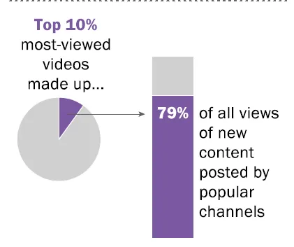
If you want to make it to the top 10, then you’ll need a good YouTube SEO strategy.
That brings us to the next point:
How YouTube Discovery Works in 2026
YouTube is no longer just a video search engine. About 70% of everything people watch on YouTube is now driven by the algorithm. Therefore, understanding how discovery works is essential for modern YouTube SEO.
Search: Intent-Driven Visibility
YouTube search drives high-intent traffic, particularly for educational content, product reviews, and problem-solution queries. When users enter a term, the YouTube algorithm evaluates how closely a video matches search behaviour and keyword relevance.
Key ranking factors in YouTube search results include:
- Keyword research alignment in titles, descriptions, and metadata
- Click-through rate from search impressions
- Watch time and audience retention depth
- Engagement signals such as comments and shares
This is where SEO strategies like semantic search optimization, Latent Semantic Indexing, and structured metadata improve discoverability across both YouTube search and Google search.
Suggested Videos
Once a viewer is watching, YouTube decides what comes next based on audience retention, engagement signals, and what similar viewers watched after the same video. You don't control this directly.
The Recommendation algorithm prioritizes videos that:
- Sustain audience retention and session watch time
- Generate engagement from the community
- Drive continued viewing across a channel or playlist
- Match viewer interests based on past actions
This means YouTube SEO is no longer just keyword optimization. Your content strategy must focus on engagement, depth, and content distribution.
Shorts Feed
Shorts function as a separate discovery engine within YouTube, optimized for rapid content consumption and high-frequency impressions. Instead of search queries, distribution is driven by immediate viewer response signals.
Shorts ranking is influenced by:
- Completion rate and re-watch behaviour
- Likes, comments, and shares
- Swipe-away rate
- Early engagement velocity
For creators and brands, Shorts typically expand audience reach quickly and drive new subscriber growth that later converts into long-form views.
Why Do You Need YouTube SEO?
YouTube is no longer just a platform for casual viewing. It’s one of the largest search engines in the world and a serious acquisition channel.
Today, brands use YouTube for lead generation, authority building, and conversion-driven content. With over 2.7 billion users globally, the audience reach is massive. More importantly, that audience is actively searching.
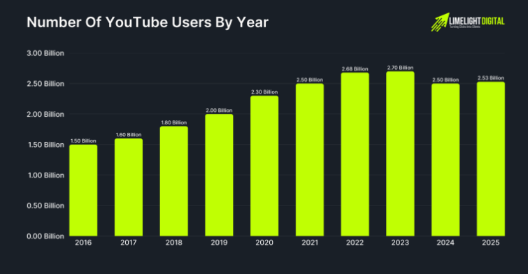
However, this is where most businesses get it wrong.
Many businesses use YouTube as a top-of-funnel channel to attract search-driven interest, nurture brand awareness, and funnel viewers into email lists or product pages.
But to improve ROI rather than other vanity metrics, you must optimize for visibility, relevance, and conversion.
First, make the shift: you should increasingly treat YouTube like a search property (akin to website content) rather than “just social media.”
As video SEO matures, you must move from casual content (e.g., random vlogs) to strategic business content aligned with target keywords, user intent, and funnel goals.
This is where optimization matters.
Without YouTube SEO, even excellent video content can get lost in the sea of uploads.
Optimized videos, on the other hand:
- Rise in search engine rankings
- Appear in more search engine results
- Drive organic traffic from both YouTube and Google
- Convert better because viewers are primed for relevance
And in 2026, competition is even tighter. Algorithm updates reward relevance, retention, and structured optimization. Early adopters gain disproportionate visibility.
Real-World Example: Hurom
Optimizing early is now a differentiator. Here’s an example of how optimization works:
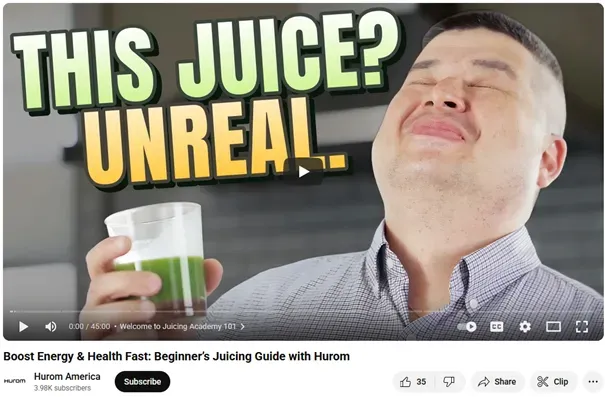
One of our clients, Hurom, is a global juicer brand from South Korea. The company is known for pioneering slow-squeeze juicing technology.
After we increased their website’s organic visibility by 88%, Hurom asked us to increase their YouTube presence as well.
But Hurom wanted more than views. They wanted authority.
Our Bluethings experts built a YouTube SEO engine that turns their episodes into discoverable, search-optimized content. Our goal is to make Hurom Juicing Academy the go-to education hub for juicing and healthy living.
We started before filming. Our SEO team researched trending keywords, audience intent, and gaps in the juicing niche. Each episode outline was built around search demand.
Each 45-minute episode became:
- 4 YouTube edits (2–8 minutes) for organic reach
- 6 short paid cuts (under 60 seconds) for ads and social
Videos went live with optimized titles, tags, and descriptions. Thumbnails were A/B tested monthly to improve clicks and retention.
Every episode also drove one SEO blog article on the Hurom Juicing Academy site, keyword-aligned, educational, and linked to YouTube.
Performance data shaped every update. Titles, visuals, and keywords evolved with audience behavior.
The end result is that Hurom now has a content system that grows smarter and ranks higher over time.
How YouTube SEO Changes Are Impacting Businesses in 2026
YouTube's ranking signals have shifted. Watch time, audience retention, and engagement now carry more weight than raw view counts.
That distinction matters more than most brands realize. A video with fewer views but 75% average retention may outrank one with more views but 30% retention.
YouTube also monitors negative feedback like “Not Interested” clicks and “session continuation” metrics, if the viewer stays on YouTube.
Basically, ranking now depends on user satisfaction and what viewers do after watching, not just total views.
That’s why, from our experience at Bluethings, a good strategy focuses on:
- Preview
- Hook
- Pacing
- How satisfying the content feels
The Critical Role of Search Intent and Audience Retention for YouTube SEO
To optimize the metrics above, your videos need to match what people are actually looking for.
Someone typing “how to edit video” wants a tutorial. Someone searching “best video editing software review” expects a comparison.
When you miss the mark, viewers drop off fast, which can hurt your ranking.
Therefore, we suggest keeping your content structured with a clear flow, recaps, and teasers to hold attention. When viewers stay engaged, your videos rank better and are more likely to drive conversions.
Pro tip: Not sure where to start? Check out the top YouTube SEO services that can make things clearer for you.
Our 12 In-House Tips: YouTube SEO Best Practices to Scale Your ROI
We‘ve spent years testing what truly moves the needle for YouTube growth and revenue.
Below, we’ll share proven frameworks that our team uses in real campaigns to drive watch time, conversions, and ROI.
Let’s see how you can apply the same strategies step by step.
1. Master Intent-Driven Keyword Research for High-Value Viewers
Don't chase broad volume. Focus on long-tail keywords and user intent that map directly to your funnel.
The YouTube SEO tools we recommend are:
- Google Keyword Planner
- Keyword Magic Tool (SEMrush)
- TubeBuddy
- VidIQ
For instance, instead of targeting "video editing," which is broad and highly competitive, you'd get better traction with "video editing for marketing agencies 2026" or "YouTube SEO checklist steps." Longer-tail keywords have less competition. That means faster rankings and more qualified traffic.
Side note: When we run internal audits at Bluethings, we consistently find that 40–50% of incremental views come from long-tail phrases that weren't in the title or tags at all. They appeared in transcripts.
This means your keyword strategy needs to account for the language your audience actually uses, not just the terms you idealized during research.
Pro tip: Before finalizing any keyword, check it directly on YouTube. Make sure the search results match the content format you're creating, whether it's a tutorial, review, comparison, or tips video.
Cross-reference with Google Trends too. It tells you whether interest in a topic is growing or declining before you invest in production.
2. Create Titles & Descriptions That Drive Clicks and Rankings
Your title does two jobs at once. It needs to rank in search and earn clicks. Most titles only do one.
Start with your main keyword, then add a hook that signals value or curiosity. Keep it under 60 characters. On mobile, YouTube truncates anything longer, and 87.35% of YouTube viewership now happens on mobile devices.
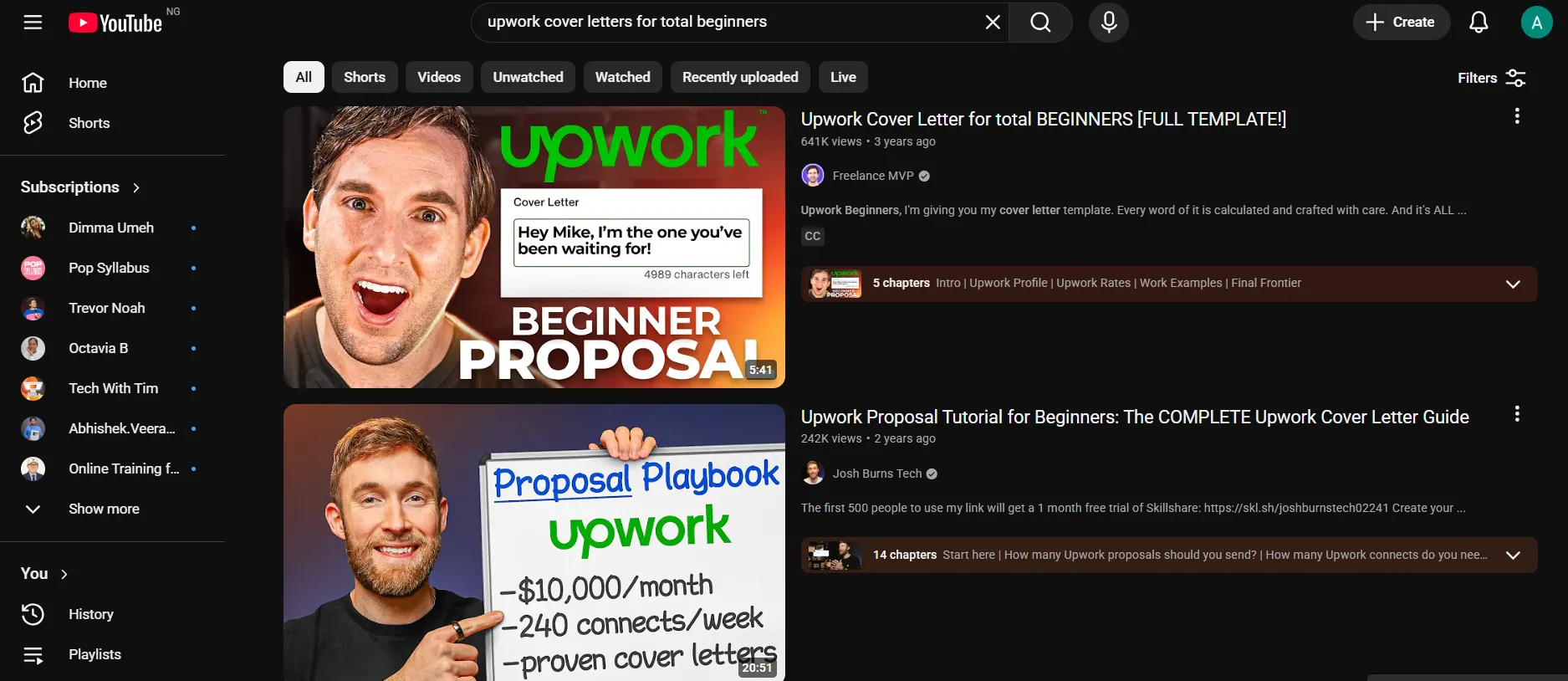
For example, instead of a vague title like “Email Marketing Tips,” a more specific version such as “Email Marketing Automation for Ecommerce Brands” aligns better with search intent and audience expectations.
This specificity earns the click. As you can see below, the first organic result matches the search term exactly.
Your description is the next SEO opportunity. Lead with your main keyword and a strong opening line.
The first 125 characters are what viewers see before clicking "show more," so make them count. Follow with 2 to 3 paragraphs that include internal links to related videos or your website, a transcript snippet, and a clear call to action.
For tags, use a mix of broad, phrase, and exact match terms. 10 to 15 tags are enough. Avoid keyword stuffing. YouTube's algorithm is sophisticated enough to penalize it.
3. Design Clean, High-Contrast Thumbnails and A/B Test for Best Performance
Your thumbnail is the first thing a viewer sees. It's the difference between a click and a scroll. In fact, thumbnails can affect CTR by 2X or more.
90% of top-performing videos on YouTube use custom thumbnails. This number alone should settle the debate on how much time you should invest in thumbnails.
We recommend using high contrast, bold text overlay, and bright colors. Try to keep it clean.
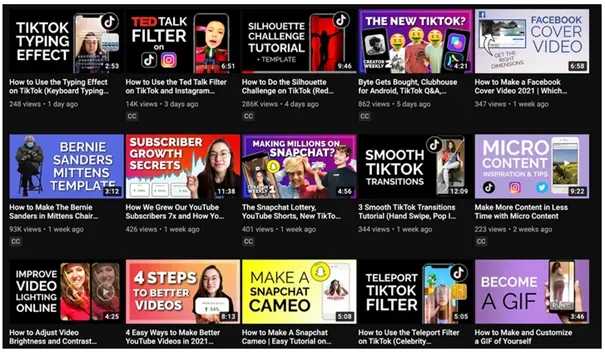
Remember that cluttered thumbnails lose attention fast, particularly on mobile, where thumbnails render small.
Run A/B tests via TubeBuddy or YouTube's built-in Thumbnail Test and Compare tool. Use a CTR benchmark of 5 to 7% as your target range.
Pro tip: If you're consistently below 3%, your thumbnails and titles need attention. Start with the thumbnail first since it loads before the viewer reads anything else.
4. Add Transcripts & Captions for Accessibility & Global Reach
Transcripts and captions do two things at once. They make your content accessible to a global audience, and they give search engines more text to index.
YouTube automatically transcribes your videos, and the accuracy has improved significantly. But auto-generated captions still have errors.
Uploading your own accurate captions through YouTube Studio ensures the right keywords get indexed correctly.
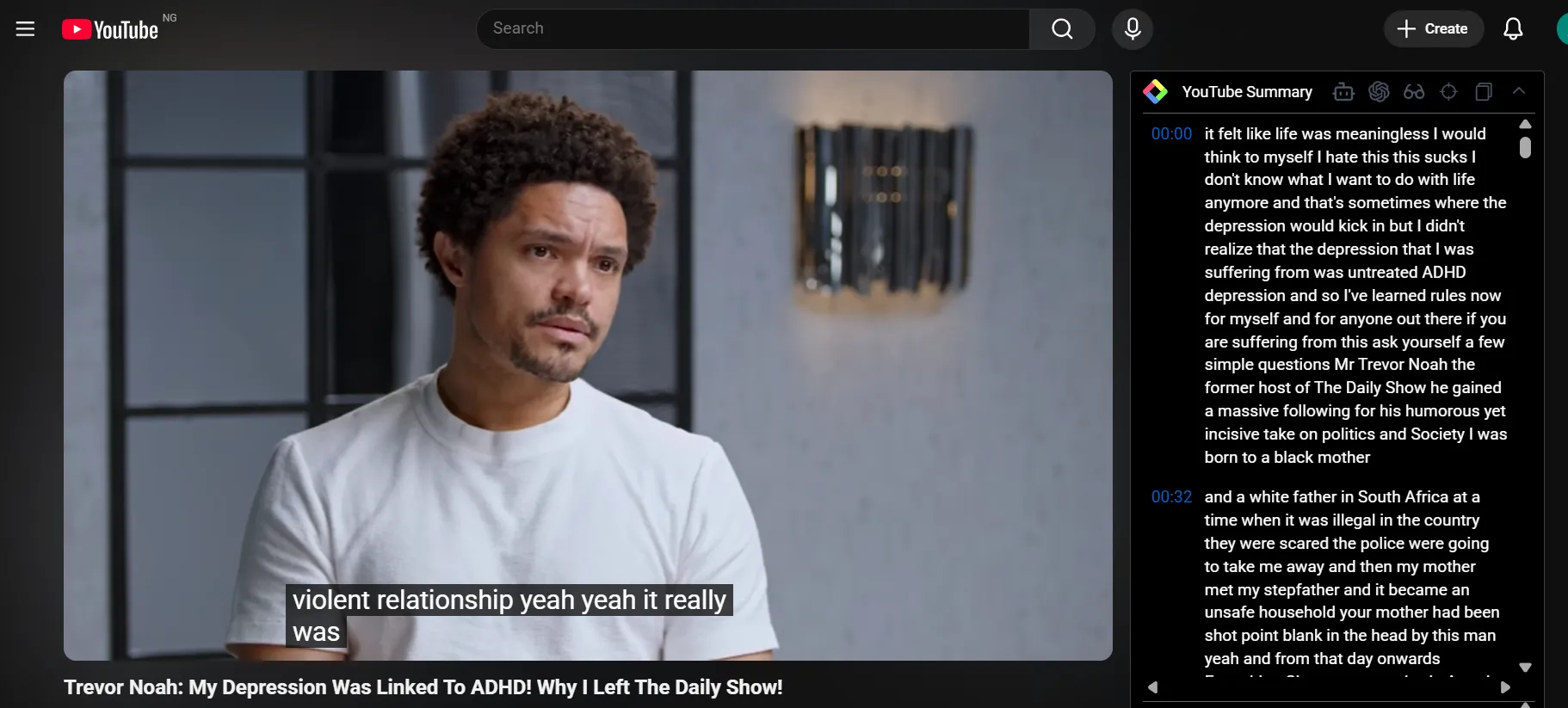
The engagement case is just as strong. Viewers are 80% more likely to watch a video to the end when closed captions are available. More watch time means stronger ranking signals.
Pro tip: Don't just paste the raw script. Edit it for readability, add punctuation and paragraph breaks, and include internal links where relevant.
5. Use Timestamps & Chapters to Boost Navigation & Search Visibility
Timestamps and chapters improve how viewers navigate your video and how YouTube understands its structure. By dividing content into labeled sections, you make it easier for viewers to jump directly to the information they need.
Add timestamps directly in your video description, starting at 0:00.
YouTube requires at least three chapters, each a minimum of 10 seconds long, to activate the feature. Format them like this: 0:00 Intro | 1:35 Step 1 | 4:20 Step 2 | 6:50 Tips | 9:15 Wrap-up.
Each chapter title gets indexed separately by Google search. This means a single video can show up for multiple search queries beyond just the main keyword in your title.
Google also surfaces individual chapters as featured snippets for how-to searches, giving your content prominent placement at the top of search results.
Pro tip: Use descriptive, keyword-aligned chapter titles instead of generic labels like “Part 1” or “Section 2.” Clear phrasing, like the example below, helps both viewers and YouTube understand each segment’s topic.
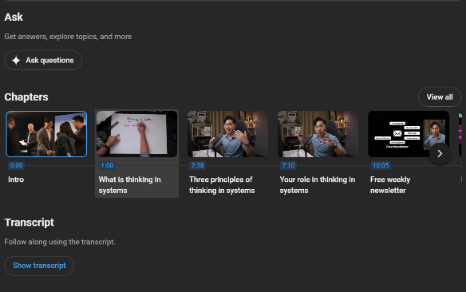
Watch this video to find out how to add timestamps quickly and easily:
6. Add Cards & End Screens to Guide Viewers to Your Next Conversion Point
Cards and end screens help extend viewer sessions by guiding people to related content on your channel. Keeping viewers watching within your content ecosystem strengthens session time and engagement signals that influence YouTube recommendations.
Here's how to use each one:
- Use cards to highlight related videos, playlists, or external CTAs like a lead magnet. Place them at natural pause points in the video, not in the opening minutes when viewers haven't decided yet if they're staying.
- Use end screens in the last 5 to 20 seconds to promote your next video, a playlist, or drive traffic to your website.
The average YouTube video completion rate sits between 50% and 70%, depending on video length. This means a significant portion of your audience never rea2ches your end screen. Cards placed mid-video, at points where retention is still strong, are where most of the action happens.
Insider tip: We test different card placements and CTA copy using YouTube Studio analytics. The data shows exactly where viewers are still engaged, which helps us place cards where they’re actually seen.
7. Boost Engagement Signals
As we have explained above, engagement is one of the currencies YouTube values most.
A video can show up in search results initially. But long-term reach depends on how viewers actually behave while watching.
Watch time, audience retention, and interactions all determine how far your content spreads.
In 2025, YouTube went a step further, shifting toward what it calls satisfaction-weighted discovery. This means the algorithm now weighs how viewers feel about a video, instead of just how long they watched it. Post-view surveys, comment sentiment, and "Not Interested" clicks all feed into this.
You can use these tactics to keep viewers engaged:
- Start with a strong hook in the first 10 to 15 seconds. YouTube Creator Insider recommends establishing value within the first 7 seconds.
- Preview what's coming and tease the next section to reduce drop-off.
- Break content into mini-sections so viewers feel a sense of progress throughout.
- Ask questions and prompt viewers to comment.
- Encourage shares at high-emotion moments in the video.
Pro tip: Check YouTube Studio analytics to spot where viewers drop off. You can then adjust your pacing or segment structure accordingly.
8. Amplify Your YouTube Content with Cross-Promotion & Internal Linking
Every video you publish is an asset that can drive traffic from multiple directions at once. Share your videos on LinkedIn, X, Facebook, and Instagram to reach audiences who may never find you through YouTube search.
The more places your video lives, the more opportunities you create for people to discover it and stay engaged.
Embed your YouTube videos in blog posts, newsletters, and relevant pages across your website. Pages with embedded YouTube videos rank for more than double the keywords on Google's first page compared to pages without video.
Every embed and backlink you generate:
- Drives organic traffic back to your website and channel
- Increases dwell time, which signals relevance to Google
- Makes your content more likely to surface in AI-generated search responses
- Expands the number of search queries your content can rank for
Inside YouTube, use playlists, cards, and end screens to guide viewers from one video to the next. The goal is to keep the session time on your channel high. The longer viewers stay, the stronger the signal to YouTube's algorithm that your content is worth recommending.
Side note: Want to get ahead in AI Overviews or ChatGPT responses? Here are the 10 best LLM optimization tools to help you do that.
9. Use YouTube Analytics for Optimization & Scalable Growth
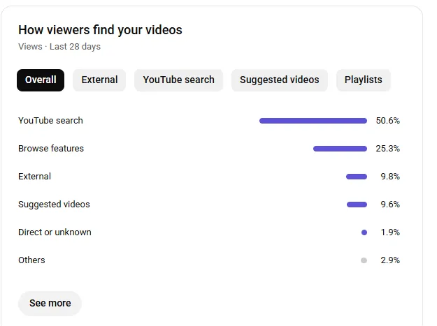
Your YouTube Studio is your command center. Track the metrics that matter most: CTR, traffic sources, audience retention, watch time, demographics, and dropoff points.
Besides, this tool shows you how your audience finds your clips, like so:
If you’re not happy with what you see, run experiments with new thumbnails, intros, or formats and track the improvements. TubeBuddy offers basic A/B testing tools for thumbnails, titles, tags, for example. And VidIQ tracks analytics and gives you more optimization insights.
Of course, you’ll need to focus on the right issue to fix your metrics:
- Low CTR typically demands more focus on thumbnails and titles.
- If retention drops fast, you’ll need to adjust pacing or sequence.
Next, use what you learn to scale. Double down on content formats, topics, and styles that consistently perform.
10. Use YouTube Shorts to Reach New Audiences
Most brands treat Shorts as an afterthought, repurposing leftover clips without any real strategy. That's a missed opportunity. 74% of Shorts views come from non-subscribers, which makes it the most powerful top-of-funnel surface on the platform right now.
The format also supports rapid testing. Shorter production cycles make it easier to validate topics, hooks, and messaging before investing in longer videos.
To improve Shorts discoverability:
- Hook attention in the first 1–2 seconds
- Design for looped viewing (seamless endings)
- Keep pacing tight and visually dynamic
- Focus on a single clear idea per Short
Pro tip: We suggest using Shorts as a teaser strategy. Extract the most compelling 45 to 60 seconds from your long-form content, create a curiosity gap, and point viewers to the full video.
Want to go deeper on Shorts optimization? We put together this dedicated guide covering exactly how to rank fast and grow your channel with Shorts SEO.
11. Build a Playlist Strategy to Increase Session Time
Playlists are one of the most underused growth levers on YouTube. When a viewer finishes one video in a playlist, the next one plays automatically.
There's no decision to make, no searching for what to watch next. That seamless continuation is exactly what keeps session time high, and session time is one of the strongest signals YouTube's algorithm responds to.
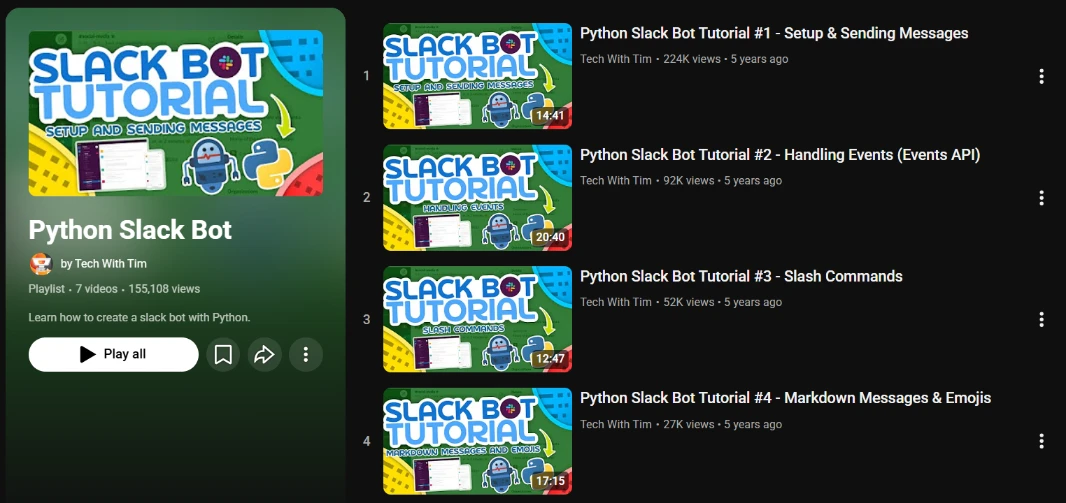
In fact, playlists can drive channel growth by 20 to 30% through better discoverability alone. That's before factoring in the watch time and session time benefits.
Let's see how you can build playlists that actually work:
- Group videos into tightly focused themes, not broad categories.
- For series content, follow a logical progression from foundational to advanced.
- Optimize your playlist title and description with relevant keywords.
- Link playlists in descriptions, cards, and end screens.
Pro tip: Place your strongest or most engaging video first in the playlist. Higher initial retention increases the likelihood that viewers continue through the sequence.
12. Use AI and LLM Optimization
AI is becoming a discovery channel in its own right. According to Emberos, which analyzed tens of thousands of AI responses over six months, YouTube now appears about 40% more often than Reddit as a cited social source across major AI chatbots, including ChatGPT, Gemini, and Perplexity.
That shift is happening for a specific reason. LLMs don't watch videos. They read the text around them: titles, descriptions, metadata, and transcripts.
What this means practically for your YouTube SEO strategy:
- Using complete sentences, clear context, and relevant keywords all help LLMs understand and cite your content.
- Uploading accurate manual transcripts.
- Building topical depth across your channel as LLMs favor sources that cover a topic comprehensively.
For ideation and production, AI tools still add genuine value. Let’s say you need to get high-performing video ideas. Start by looking at your top 10 past video titles and the keywords that worked best. Feed those into GPT-5 to generate five new titles and thumbnail ideas.
Then A/B test them against your current versions to see what really drives clicks and watch time. This keeps your content fresh, relevant, and constantly improving.
Bonus Tip: Integrate Your YouTube SEO for Higher ROI
Note that YouTube can’t operate in isolation.
Tie your video SEO to your website, search strategy, and content ecosystem so every channel strengthens the others.
This approach creates a unified system that drives measurable ROI across all digital touchpoints.
YouTube & Google Search: Embedded Videos & Schema Markup
Embedding your YouTube videos on relevant pages of your website benefits both sides. Your website gets richer content. Your videos get additional entry points from Google search.
Pro tip: Use structured data (JSON-LD VideoObject schema) so search engines can interpret your video. That way, it can become eligible for rich snippets, video carousels, and better search engine rankings.
%20Example.webp)
When embedding, place the video high on the page (above the fold) to signal importance.
Use the same video title, video description, thumbnail URL, duration, and transcript in your schema markup for consistency.
Here’s a quick tutorial on how to make it happen:
But don’t stop at that.
Keep classic on-page SEO sharp: optimize headings, internal links, and alt text for images or thumbnails. Make sure page speed is fast using Google PageSpeed Insights, and check mobile responsiveness and HTTPS security.
Strong website SEO management supports your videos and helps rankings across the board.
Measure YouTube SEO Beyond Views
Connect your metrics to real business outcomes with UTM tags and tracking in Google Analytics or your CRM. Track how many leads, signups, or purchases come from YouTube referrals. Use tools like Google Search Central and Search Console to measure video-driven organic traffic.
For brand impact, run surveys or YouTube Ads brand lift studies to estimate how much awareness and recall your organic videos are generating. This shows the full value of your video strategy beyond clicks and views.
Build Your YouTube SEO Strategy with Bluethings
YouTube SEO in 2026 goes beyond uploads. It blends creative strategy with structured search optimization.
Start with intent-driven keywords, compelling titles, and standout thumbnails. Use transcripts, schema markup, and smart integration to expand reach. Refine performance with analytics, scale with AI, and connect views to conversions.
When done right, YouTube stops being just a discovery channel and becomes a scalable growth engine.
At Bluethings, we build data-backed YouTube SEO systems that align keyword research, content production, and performance analytics into one growth framework.
Our team helps brands move beyond vanity metrics and turn YouTube into a measurable acquisition channel that compounds over time.
If you’re ready to build a search-driven YouTube engine that drives authority and ROI, get in touch with us today.
FAQs
Why is YouTube SEO important for my brand?
YouTube SEO drives visibility, engagement, and growth. Optimized videos reach the right audience, improve watch time, and feed into broader content strategies. When paired with your website and marketing channels, it turns YouTube from a discovery platform into a measurable growth engine.
How do I optimize video titles and thumbnails?
Lead with your primary keyword and add a hook that sparks curiosity or highlights value. Keep titles concise so they don’t truncate in search results. Test multiple thumbnail variations to see what drives clicks, using A/B testing tools or internal analytics to find the best-performing combination.
What role do transcripts and chapters play?
Transcripts make videos accessible, boost search visibility, and help search engines index long-tail phrases. Chapters break content into digestible sections, improve retention, and allow viewers to jump to what they need. Together, they enhance engagement and help YouTube understand your video’s structure and topics.
How can AI help my YouTube SEO workflow?
AI speeds up keyword research, generates title and description options, predicts retention risks, and suggests thumbnail ideas. It acts as a co-pilot, giving you scalable insights while human creativity, editorial judgment, and domain expertise guide the final strategy for maximum impact.
How do I measure ROI from YouTube?
Track performance through UTM tags, Google Analytics, or a CRM to see leads, signups, and conversions from YouTube traffic. Monitor watch time, retention, and audience engagement. Combine this with brand lift studies or surveys to quantify awareness and recall, linking video success directly to business outcomes.
Does Bluethings specialize in B2B and SaaS SEO?
Yes. Bluethings specializes in B2B and SaaS SEO with a strong focus on revenue-driven growth. We understand longer sales cycles, multi-touch buyer journeys, and high-intent keyword targeting. Our strategies align organic traffic with pipeline generation, helping you attract decision-makers instead of just increasing surface-level traffic.
How does Bluethings approach link building for competitive industries?
We focus on strategic, relevance-first link building. Instead of chasing volume, we secure high-authority placements that strengthen topical authority and domain trust. Our outreach targets industry-relevant publications, niche platforms, and contextual opportunities that improve rankings while supporting long-term brand credibility.
Appendix: Sources
- 500 hours of video uploaded to YouTube every minute
- 70% of YouTube views driven by the algorithm
- Top 10% of YouTube videos capture 79% of all views
- YouTube Shorts generates 200 billion daily views
- 74% of Shorts views come from non-subscribers
- 87% of worldwide YouTube visits happen on mobile
- 90% of top-performing YouTube videos use custom thumbnails
- YouTube CTR benchmark: half of all channels sit between 2% and 10%
- Videos with closed captions are 80% more likely to be watched all the way through
- YouTube chapter titles indexed separately by Google
- Google surfaces individual chapters as featured snippets
- Average YouTube video completion rate sits between 50% and 70%
- YouTube shifted toward satisfaction-weighted discovery in 2025
- Pages with embedded YouTube videos rank for double the keywords on Google's first page
- Creators who analyze search terms achieve 41% better organic reach
- Playlists can drive channel growth by 20 to 30%
- YouTube now appears 40% more than Reddit as a cited social source in AI chatbots