.webp)
The short-form video format on YouTube is no longer just an experiment. It’s dominating the game. YouTube Shorts now generates over 200 billion daily views. And the platform continues to expand across its global user base of more than 2.70 billion monthly logged-in users.
In 2026, visibility depends less on posting volume and more on sending clear signals to the recommendation system.
YouTube’s algorithm now evaluates Shorts through a deeper set of behavioral and contextual indicators, including:
- Audience retention patterns (especially the first 3-second hold rate)
- Viewer satisfaction signals (likes, shares, comments, saves, replays)
- Topical authority across your channel
- Session continuation (what viewers watch after your Short)
- Metadata clarity and contextual alignment
Shorts now function inside a larger discovery system that connects search results, recommendations, channel authority, and even Google indexing.
In this guide, you’ll learn how to apply modern YouTube SEO and short-form growth strategies in 2026 so your channel gains sustainable momentum.
We’ll cover:
- The ranking signals that matter most for Shorts in 2026
- How to optimize titles, descriptions, tags, and thumbnails for higher CTR
- Why spoken keywords, on-screen text, captions, and audio trends now work together as contextual signals
- How to structure video length, playlists, and series to improve session duration
- How to track performance using YouTube Studio, Google Search Console, and SEO tools
PS: If your Shorts are getting views but not building long-term growth, Bluethings helps brands connect video SEO with full-funnel optimization. We turn short-form visibility into measurable rankings, engagement, and conversions.
TL;DR
- Optimize for retention, replays, and session contribution, not just views.
- Hook viewers in the first few seconds and deliver one focused idea with tight pacing.
- Align titles, descriptions, spoken keywords, and captions for strong contextual signals.
- Design thumbnails strategically for search, suggested videos, and channel browsing.
- Build topical authority through consistent posting, clusters, and structured series.
- Track retention curves, CTR, and traffic sources, then refine based on performance data.
Proven YouTube Shorts SEO Tips to Rank Faster and Reach More Viewers in 2026
The success of your YouTube Short is not about creativity alone. The creators and brands seeing consistent growth are the ones combining strong creative execution with a data-driven SEO strategy.
Shorts perform best when retention data, keyword alignment, session contribution, and audience signals all work together. The algorithm now evaluates how well your content satisfies intent, how it connects to your broader channel topic, and whether it keeps viewers watching beyond a single clip.
Below we share practical, field-tested YouTube Shorts strategies designed to help your short-form videos rank faster in search results, gain traction in the Shorts feed, and contribute to long-term channel growth.
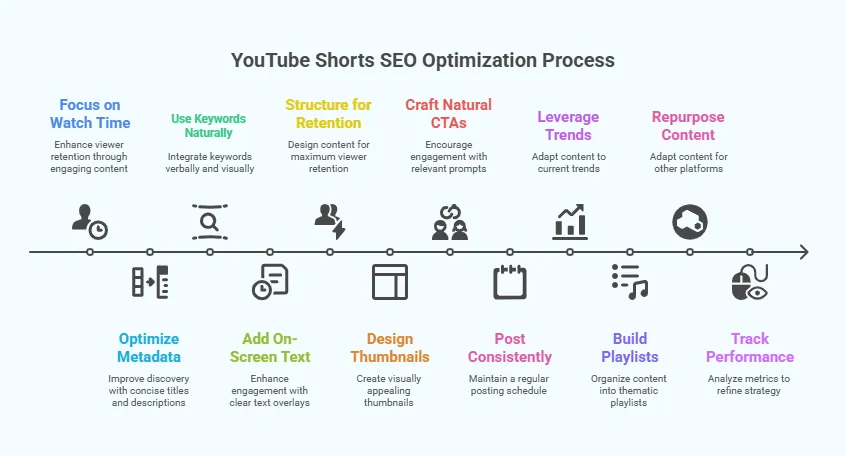
1. Focus on Retention, Replays, and Viewer Satisfaction Signals
If you want your Shorts to rank in search and gain traction in the Shorts feed in 2026, retention quality should be your primary focus.
This is where most teams mess up. They chase views and ignore the first few seconds, even though that moment decides whether the video goes anywhere.
In our daily practice, we review Shorts' performance starting with retention first. We look at the opening frame, the first three seconds, and the exact drop-off points before we touch titles or keywords.
YouTube’s system now evaluates several viewer behavior signals, including:
- First 1–3 second hold rate (did viewers scroll or stay?)
- Average percentage viewed (APV)
- Completion rate
- Replays and loops
- Engagement signals (comments, saves, shares)
- Whether your Short leads to continued session watch time
Viral Shorts (1M+ views) consistently show retention rates above 75%, with strong replay behavior. This shows that high-performing content doesn’t just get watched once, but again and again.
To increase retention in 2026:
- Start with a scroll-stopping frame: The first second must visually disrupt the feed. Bold movement, facial expression shifts, text hooks, or unexpected visuals outperform slow intros.
- Front-load value: Don’t “warm up.” Deliver the core promise immediately. Viewers decide fast.
- Edit for micro-pacing: Cut aggressively. Remove breathing gaps. Change framing or add text overlays every 2-4 seconds to reset attention.
- Build intentional loops: End with a visual or verbal callback to your opening frame so the video restarts naturally. Loop-friendly Shorts often outperform longer, linear ones.
- Trigger interaction strategically: Ask one frictionless question aligned with the content. Comments and saves signal satisfaction, especially when they happen before the viewer exits.
When viewers stay, rewatch, or continue watching your other videos, you’re sending strong quality signals. In 2026, session contribution matters. A Short that drives viewers deeper into your channel often ranks longer than one that spikes and fades.
2. Optimize Metadata for Discovery and Contextual Relevance
Metadata plays a critical role in helping YouTube understand where your Short fits within a topic cluster.
Your title, description, hashtags, and tags act as contextual signals. When aligned properly with your spoken keywords and on-screen text, they strengthen your video’s relevance for both YouTube Search and Google’s video results.
Many creators upload Shorts with vague titles or random hashtags. From what we have seen, weak Metadata often limits discovery even when the video itself performs well.
While brevity still performs well, clarity matters more than strict character limits. Titles in the 40-60 character range maintain an 8.9% higher click-through rate because they display cleanly on mobile and avoid truncation.
A good real-world example is the video below. The title is concise, front-loads the primary keyword “Google Ads tutorial,” and promises quick value:
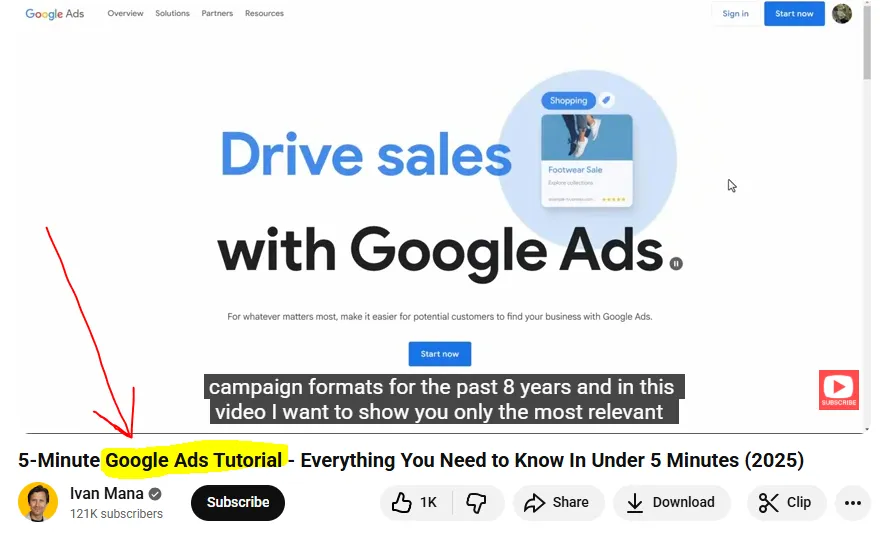
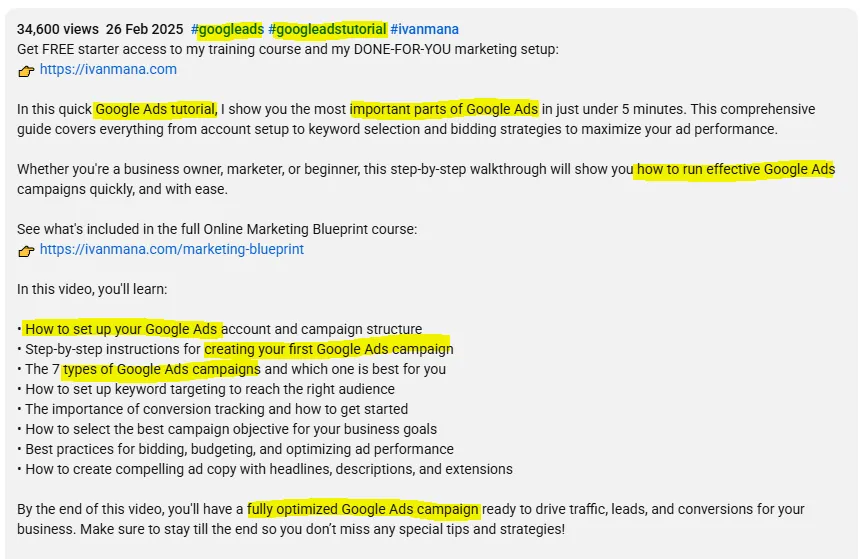
In the video description, he repeats relevant keywords like “creating your first Google Ads campaign” and uses short bullet points to highlight what viewers will learn.
This type of structure helps YouTube instantly understand what the video is about and match it to related search results.
For Shorts, particularly, avoid using vague curiosity titles that lack keywords. Discovery in 2026 is increasingly intent-driven.
Here’s how to optimize your YouTube Shorts metadata:
- Choose one primary keyword focus: Use tools like Google Keyword Planner, vidIQ, TubeBuddy, or YouTube’s own search suggest to identify what people are actively searching.
- Place your main keyword early in the title: Example: “YouTube Shorts SEO Tips (2026 Guide)” instead of “Grow Fast on YouTube with This Trick”
- Write a keyword-aligned first sentence in your description: The first 1 - 2 lines matter most. Reinforce your main topic naturally before adding context or value bullets.
- Use 2-4 focused hashtags: Avoid clutter. Select hashtags that match your niche or specific topic rather than generic broad terms.
- Cluster related keywords strategically: Mix short-tail (“YouTube SEO”) with long-tail variations (“how to rank YouTube Shorts in 2026”) within your description.
- Keep tags minimal and relevant: Tags now play a supporting role. Relevance outweighs quantity.
When your metadata, spoken script, captions, and on-screen text all reinforce the same topic, you create a unified contextual signal. That alignment improves discoverability and increases the likelihood of ranking across search and suggested feeds.
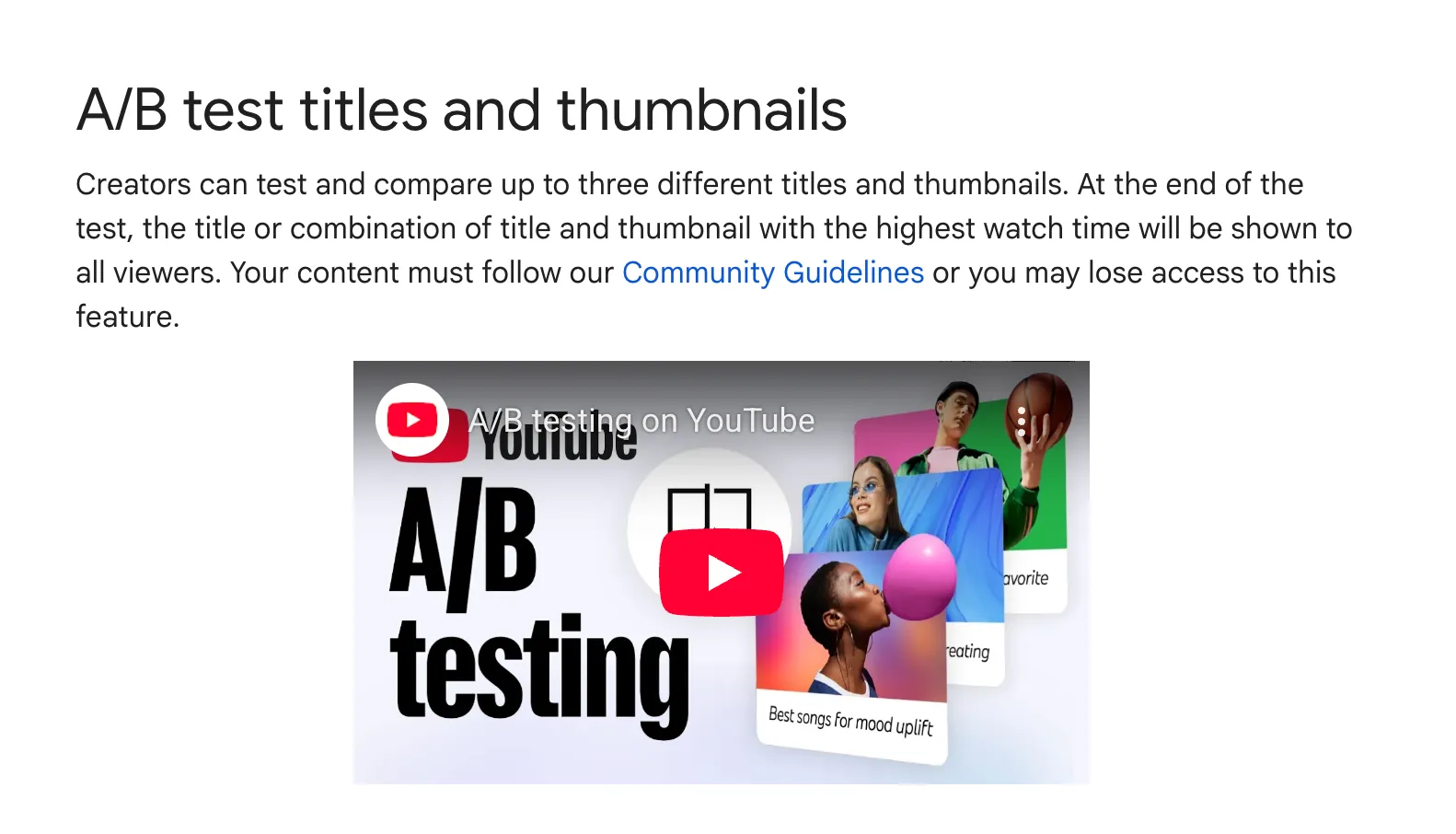
Pro tip: Use YouTube’s built-in thumbnail and title testing (where available) or rotate title variations every few weeks. Compare CTR, average view duration, and impressions to determine whether keyword-forward or curiosity-driven phrasing performs better for your audience.
3. Use Keywords Naturally and Say Them On Camera
YouTube does not rely only on metadata anymore. The platform now understands the content inside your video.
Thanks to advanced speech recognition and multimodal AI indexing, YouTube analyzes spoken words, captions, on-screen text, and visual context together. This means your script now plays a direct role in discoverability.
This is where most teams get it wrong. Many creators spend time optimizing titles and hashtags, but forget that the algorithm can hear what you say in the video.
Based on our experience, when your target keyword appears in your title, description, and spoken narration, you create a strong contextual alignment signal. This increases the likelihood of ranking in YouTube Search, appearing in suggested feeds, and surfacing in Google’s video results.
Video visibility in search continues to expand, especially for tutorials, product explainers, and educational content.
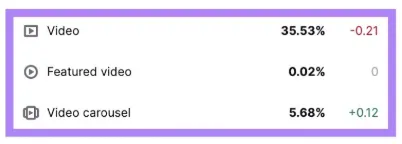
According to Semrush Sensor data from May 2024, nearly 40% of desktop Google search results in the U.S. included some form of video content, whether a featured video, a standalone result, or a carousel. Clear keyword reinforcement improves your chances of being included in those results.
Here’s how to apply this in your YouTube Shorts in 2026:
- Open with your primary keyword naturally: Instead of easing in, state the topic clearly. Example: “Here are YouTube Shorts SEO tips to help you rank faster in 2026.”
- Reinforce it mid-video: Repeat the keyword variation naturally while delivering value. This strengthens semantic relevance without sounding repetitive.
- Align everything: Your spoken words, title, description, captions, and on-screen text should all support the same central topic.
- Keep it conversational: Avoid awkward phrasing or stuffing. YouTube’s system now recognizes natural language patterns and intent, so clarity beats keyword density.
- Echo keywords visually: Add matching captions or short text overlays that reinforce the phrase being spoken. This supports accessibility and contextual indexing.
When your message is consistent across audio, visual, and metadata layers, you send a clear topical signal. That alignment improves ranking potential and strengthens your authority within that niche over time.
4. Add On-Screen Text and Captions
A significant percentage of Shorts are still watched without sound, particularly during the first few seconds. If your message depends entirely on audio, you’re losing retention before you even begin.
We have noticed that Shorts that communicate the core message visually tend to hold attention longer during silent viewing.
Captions and on-screen text now serve three major functions:
- Improve accessibility
- Increase retention during silent viewing
- Strengthen contextual signals for YouTube’s AI indexing

Videos with clear captions consistently outperform those without them in average percentage viewed. Even small retention gains can dramatically affect distribution in the Shorts feed.
To optimize text overlays and captions:
- Keep text minimal and intentional: Avoid crowding the screen. One clear idea per frame improves readability and reduces cognitive overload.
- Design for mobile-first viewing: Use high contrast colors, large fonts, and safe-zone placement to avoid UI overlap (like buttons and captions getting cut off).
- Edit captions for accuracy: Auto-captions are better than ever in 2026, but manual review improves clarity and professionalism. Clean captions also strengthen keyword recognition.
- Reinforce your primary keyword visually: If you say the keyword out loud, show a shortened or highlighted version on screen. This supports multimodal indexing and comprehension.
- Use kinetic text strategically: Subtle movement in text (pop-ins, highlights, emphasis shifts) can act as micro pattern interrupts that increase retention.
When spoken words, captions, and on-screen text all align with your topic, you enhance clarity and send stronger semantic signals. The result is higher retention, better contextual understanding, and improved discoverability.
5. Structure for Retention and Replays
High performing Shorts rarely happen by chance.
Shorts that perform consistently well are designed around one core objective: keep viewers watching until the final frame, and ideally, watching again.
In fact, creators who maintain 70% average percentage viewed (APV) within the Shorts traffic source typically see stronger distribution in both search and the Shorts feed.
But completion alone isn’t the goal anymore. Replays and session continuation now carry significant weight. A Short that leads to another view (of the same video or another one on your channel) sends a powerful satisfaction signal.
Many creators focus only on finishing the video. In practice, structure matters just as much as the topic itself.
To build your next YouTube Short for maximum retention, focus on these principles:
- Hook immediately: The first 1-2 seconds determine scroll behavior. Start mid-action, with a bold visual, or a compelling outcome before context.
- Deliver one clear idea: Keep your Short focused. Overloading with multiple concepts reduces clarity and lowers completion rate.
- Edit aggressively: Remove pauses, filler transitions, and unnecessary context. Every second must justify its place.
- Design for loops: End where you began, visually or verbally. Seamless loops often increase total watch time without feeling forced.
- Encourage session continuation: Instead of a generic “subscribe,” try a specific bridge: “Part 2 breaks down the exact framework.” This nudges viewers into your content ecosystem.
When your structure supports fast delivery, clarity, and replay potential, you boost average view duration, increase rewatch behavior, and improve your video’s contribution to overall session time, all key drivers of sustained reach.
6. Design Thumbnails That Still Convert
Shorts autoplay in the feed, but thumbnails still play an important role. They influence discovery in YouTube Search, on your channel page, inside suggested videos, and during desktop browsing.
Your thumbnail is mostly the deciding factor when someone chooses between multiple videos on the same topic. In fact, videos with custom thumbnails usually make up about 90% of top-performing uploads.
Strong-performing Shorts typically follow three visual principles:
- Clear focal point (often a face or bold object)
- High contrast for mobile readability
- Minimal, benefit-driven text

Custom thumbnails consistently outperform auto-generated frames because they communicate intent instantly. Even when the Short autoplays, a compelling thumbnail increases click-through rate in search and improves long-term discoverability.
In our experience, the best thumbnails answer a silent question for the viewer. Why should I watch this video instead of the others on the page?
To design thumbnails that convert:
- Use expressive human elements when relevant: Emotion-driven facial expressions tend to outperform static graphics in most niches because they trigger curiosity and relatability.
- Keep text short and scannable: Three to five words max. Large, bold, and readable on a small screen.
- Prioritize contrast over complexity: Simple backgrounds with strong color separation stand out more than busy designs.
- Stay visually consistent: Use repeatable brand colors, fonts, or layout patterns to build recognition across your Shorts library.
- Test variations strategically: Where available, use YouTube’s thumbnail testing tools or rotate designs manually. Compare CTR alongside retention. High clicks without strong retention won’t sustain distribution.
Remember that a strong thumbnail also prepares the viewer for what the video will deliver. When the visual promise matches the content, satisfaction signals tend to improve once the video starts playing.
7. Craft Natural CTAs
A strong Short should guide the viewer toward a simple next step. The most effective videos maintain momentum even after the main idea finishes.
When you invite viewers to take one simple, relevant action, like “save this for later,” “comment your niche,” or “watch Part 2”, you create frictionless engagement. These micro-actions signal satisfaction and increase the likelihood of further distribution.
Research shows that videos with clear, well-placed calls to action see significant lifts in engagement. In fact, personalized CTAs have been shown to improve conversion rates by up to 202%.
Engagement metrics such as comments, saves, shares, and follow-through views play a meaningful role in how widely your Short is shown. But forced or generic CTAs often reduce authenticity, and viewers can feel that immediately.
Now let’s explore how to make CTAs work naturally:
- Match the CTA to the content: If you shared a checklist → “Save this for your next upload.” If you sparked debate → “Agree or disagree?” If this is part one → “Part 2 breaks down the framework.”
- Place it before attention drops: Don’t wait until the final half-second. Insert the CTA while engagement is still high.
- Stick to one clear action: Multiple prompts dilute focus. Choose the single behavior you want most.
- Make it conversational: Frame it as a continuation of the value you delivered, not a demand.
A well-placed CTA strengthens community interaction, increases replay behavior, and supports session continuation. These are all signals that help your Shorts maintain momentum beyond the first push.
8. Post with Purpose and Consistency
Consistent publishing helps your channel maintain momentum over time. And strategic publishing helps that momentum turn into steady growth.
Publishing Shorts sporadically can create temporary spikes, but steady uploads build topical authority and algorithm trust. Posting 2–5 Shorts per week is a strong baseline for most creators and brands looking to stay visible without sacrificing quality.
But frequency alone isn’t enough. Each Short should serve a clear purpose - awareness, education, engagement, or conversion. When your content supports a defined objective, your channel feels intentional rather than random.
We suggest using your analytics in YouTube Studio to identify when your audience is most active, then experiment to discover your best posting times by timezone and region. Consistent uploads that deliver value week after week signal reliability, increase session time, and give your channel a stable platform to scale.
To approach posting strategically:
- Establish a realistic cadence: Choose a schedule you can sustain long-term. Burnout kills consistency faster than anything else.
- Align Shorts around topic clusters: Publishing multiple videos around a focused theme strengthens contextual authority and improves recommendation likelihood.
- Use analytics to refine timing: In YouTube Studio, review when your audience is most active. Test posting times across different days and time zones to identify patterns.
- Measure beyond views: Track retention, CTR, and session contribution alongside upload frequency. Growth compounds when consistency meets performance.
Reliable publishing combined with focused topics helps your channel build recognition, strengthen viewer habits, and improve overall distribution stability.
Insider tip: Instead of guessing posting times, analyze your last 20-30 uploads to identify performance clusters. Consistent high-engagement windows often emerge within a narrow time range.
9. Leverage Trends and Timely Topics
Trending sounds, formats, and breakout topics can accelerate reach, but only when they align with your audience and channel theme.
Short-form content naturally earns higher engagement than long-form in early discovery phases. When you tap into a rising trend at the right moment, you benefit from built-in search demand and feed momentum. But trend-chasing without relevance typically leads to short-lived spikes rather than sustained growth.
Many creators run into problems at this stage. They chase every viral format they see, even when the trend has little connection to their niche. We have observed that this approach usually produces short bursts of views without building lasting audience interest.
The goal is to adapt trends in a way that supports your channel’s topic instead of copying them directly.
The following strategies can help you stay ahead of trends:
- Filter trends through your niche: Instead of copying a viral format directly, ask:
“How does this apply to my audience’s problem?” - Move early, not late: Freshness matters most during the breakout window. Publishing within the first 48-72 hours of rising interest increases visibility potential.
- Watch retention, not just views: Trend-based Shorts often get higher impressions, but if retention drops, distribution slows quickly. Prioritize quality over hype.
- Use data tools intentionally: Monitor YouTube search suggest, YouTube Trends, Google Trends, and even competitor uploads to identify patterns early.
Blend trends with evergreen authority: Alternate timely content with educational or niche-defining Shorts to maintain topical consistency.
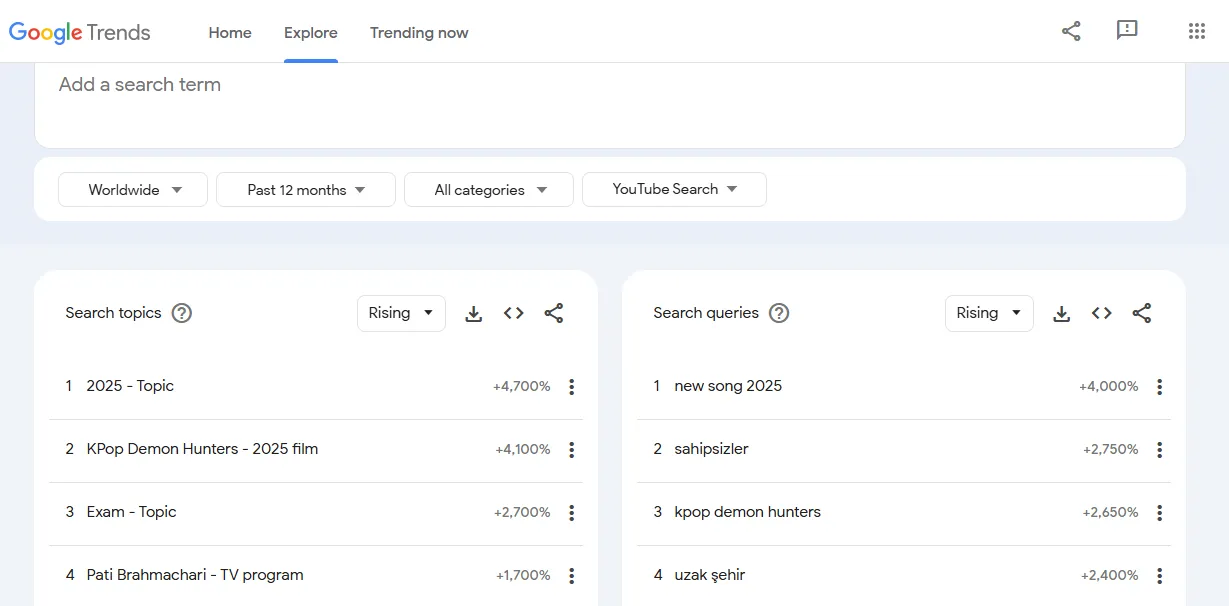
When you respond quickly to what’s gaining traction, your content rides existing audience curiosity, giving your YouTube channel a better shot at appearing in search results, suggested videos, and the Shorts feed.
As Danielle Wiley, Forbes Councils Member, notes:
"YouTube Shorts means that more brands can engage a wider audience demographic with on-trend short videos—with the added benefit of connecting Shorts content to already established YouTube presences."
Read Next: 15 Best SEO Blogs to Follow in 2025 for Proven Ranking Strategies
10. Build Playlists and Series
Many Shorts perform well individually, but stronger growth usually happens when videos connect to a broader structure.
When you connect related Shorts through playlists or structured mini-series, you turn single views into extended viewing sessions. Session duration remains one of the strongest distribution signals, and organized content increases the likelihood that viewers stay on your channel longer.
Instead of uploading disconnected clips, group your Shorts around clear themes such as:
- SEO Quick Tips
- Creator Experiments
- Marketing Myths
- Product Tutorials
- Case Study Breakdowns
This structure creates a natural binge path. When someone finishes one Short and sees a clearly related next step, continuation becomes effortless.
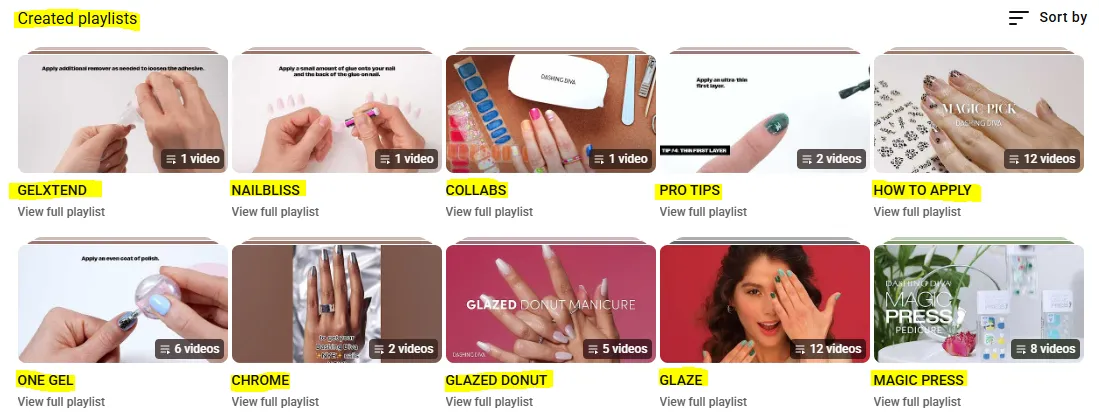
A good example is Dashing Diva, who organizes their YouTube playlists by themes such as GELXTEND, NAILBLISS, and PRO TIPS.
Here’s why it works:
- Increases session continuation: A viewer who watches two or three Shorts in a row sends a stronger quality signal than a one-off view.
- Strengthens topical authority: Multiple videos around the same subject reinforce your relevance within that niche.
- Improves search alignment: Playlists themselves can rank in search results, adding another discoverability layer.
- Trains audience expectations: When viewers recognize a recurring format (e.g., “Episode 3” or “Part 4”), they’re more likely to return.
When your Shorts connect through clear themes and series structures, your channel gains depth. Over time, this organization helps viewers explore more of your content instead of stopping after a single video.
11. Repurpose Intelligently Across Platforms
Repurposing works best when content is adapted thoughtfully rather than copied directly.
If you already invest time in creating strong Shorts, you can extend their lifespan by sharing them across other platforms. The key is to adjust the format so it fits the expectations and behavior of each environment.
Short-form ecosystems like Instagram Reels, TikTok, and LinkedIn reward content that feels platform-specific. Simply cross-posting without adjustments often reduces performance.
To repurpose the right way:
- Edit for native formatting: Adjust captions, text placement, pacing, and aspect ratio to match each platform’s interface and audience behavior.
- Remove watermarks and recycled branding: Platforms prioritize original-looking content. Watermarks can reduce reach and limit distribution potential.
- Customize hooks for each audience: The same topic may need a different opening line depending on the platform’s user intent.
- Add platform-specific CTAs: On LinkedIn, encourage discussion. On TikTok, lean into engagement prompts. On Instagram, guide profile clicks.
- Track referral performance: Use YouTube Analytics to monitor external traffic sources. Identify which platforms actually drive engaged viewers.
When done strategically, repurposing amplifies reach while reinforcing your core topic across multiple ecosystems. Over time, this approach strengthens your presence across the broader short-form video ecosystem.
12. Track Performance and Iterate
Publishing a Short marks the starting point of the strategy. Real growth usually begins during the analysis phase.
After your Shorts go live, shift from creator mode to optimization mode. The goal goes beyond identifying which videos performed well. The real value comes from understanding why certain Shorts gain traction while others slow down.
Inside YouTube Studio, focus on:
- Impressions vs. click-through rate (CTR): Is your packaging strong enough to earn the click?
- Audience retention and average percentage viewed (APV): Where are viewers dropping off?
- First 3-second hold rate: Are you stopping the scroll?
- Replays and engagement signals: Are viewers satisfied enough to watch again or interact?
Traffic sources: Is performance coming from Shorts feed, search, or suggested videos?
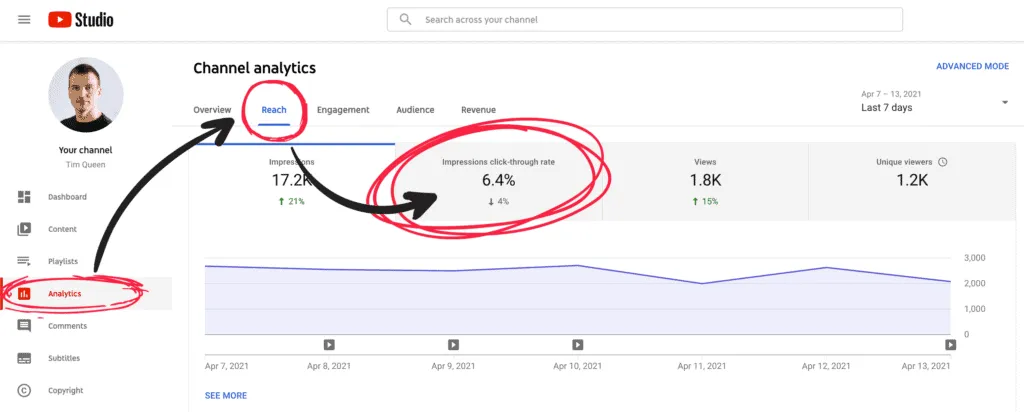
Pair this with Google Search Console to evaluate how your videos appear in Google’s results, especially for tutorial or intent-driven searches.
How to iterate effectively:
- Test one variable at a time: Adjust titles, thumbnails, or hooks, not everything at once. Controlled testing produces clearer insights.
- Audit your top and bottom performers: Compare your highest-retention Short with your lowest. Identify structural differences.
- Refine your opening frames: If retention drops early, your hook likely needs adjustment.
- Review session contribution: Look at whether viewers continue watching your other content. Shorts that drive deeper channel engagement often sustain reach longer.
Small refinements compound. When you treat every upload as both content and data, your strategy evolves with each video instead of relying on guesswork.
13. Build Topical Authority, Not Just Individual Views
Many creators focus on getting one Short to perform well. Long-term growth usually comes from building depth around a clear topic.
YouTube increasingly rewards channels that demonstrate sustained depth within a clearly defined niche. Instead of chasing viral spikes, focus on building a body of content that reinforces your expertise from multiple angles.
Topical authority compounds when your Shorts consistently:
- Address related sub-questions within the same theme
- Progress from foundational ideas to advanced breakdowns
- Connect naturally through structured series and intentional sequencing
When viewers repeatedly encounter your channel solving variations of the same problem, they begin to recognize your content as a reliable resource.
This recognition improves search visibility, strengthens suggested video placement, and helps your channel maintain momentum.
In our experience, authority develops gradually through consistent publishing within the same subject area. Each video adds another layer that strengthens the overall topic cluster.
14. Optimize for AI-Driven Discovery and Intent Signals
YouTube’s discovery system in 2026 doesn’t rank videos by keywords alone. It models intent patterns.
Instead of simply matching phrases, the platform analyzes how viewers behave around specific problems, questions, and outcomes. It looks at who watches your content, what they watch before and after, how long they stay, and whether similar viewers engage deeply.
From our observations of channel analytics, behavioral similarity now plays a major role in distribution. Videos that consistently satisfy a particular audience intent tend to surface more frequently in recommendations.
AI-powered discovery evaluates signals such as:
- Whether viewers searching for a specific problem consistently engage with your content
- If your videos satisfy intent faster than competing uploads
- How often do your Shorts contribute to longer viewing sessions across related topics
- Whether your channel demonstrates depth around a clearly defined problem set
In practical terms, the platform is mapping viewer journeys across related topics. The goal is to understand which creators repeatedly satisfy the same audience needs.
To optimize your Shorts for intent-based discovery, you can consider these practices.
- Solve one specific problem per Short
- Target micro-intents rather than broad topics
- Build layered content that mirrors how audiences naturally learn
- Analyze audience retention by traffic source (search vs Shorts feed vs suggested)
- Identify which viewer segments return repeatedly
The clearer your channel’s thematic footprint and the stronger your audience satisfaction signals, the more likely your content is to be surfaced to similar viewers across AI-powered recommendation systems.
Remember: channels that consistently address the same problem set gradually gain stronger recommendation momentum as the system learns which audiences respond best.
Turn Every YouTube Short into a Growth Engine with Bluethings
High-performing YouTube Shorts aren’t accidental. They’re engineered.
When executed properly, YouTube Shorts become more than quick videos. They become strategic entry points into your ecosystem.
If you’re ready to turn short-form content into measurable growth, Bluethings combines video SEO, content strategy, and performance analytics to increase visibility, engagement, and conversion across search and recommended feeds.
Get in touch with us to see how a data-driven approach can transform your Shorts into long-term growth drivers.
FAQs
How long does it take for a YouTube Short to rank?
YouTube Shorts can start gaining traction within a few days, but real ranking consistency takes a few weeks. Factors like audience retention, engagement rate, and keyword relevance influence how quickly your Short appears in search results and the Shorts feed. Regular posting and metadata optimization help your channel build credibility faster over time.
Should I use hashtags in every YouTube Short?
Yes, but keep them targeted. Add two to four relevant hashtags that match your topic or keyword focus. This helps YouTube’s algorithm categorize your Short correctly and improves its chances of appearing in related searches. Avoid using generic or spammy tags; relevance and consistency matter far more than quantity.
What’s the best length for YouTube Shorts SEO?
The sweet spot is between 15 and 40 seconds. That range keeps viewers engaged and improves audience retention, which is a key ranking signal. Focus on delivering one clear message instead of trying to fit too much in. A tightly edited, fast-paced Short performs better than a longer clip that loses attention halfway through.
Do captions help YouTube Shorts visibility?
Absolutely. Captions make your content accessible and help YouTube’s algorithm understand your spoken keywords. They also keep viewers engaged when watching without sound. Adding captions or on-screen text increases watch time and supports better keyword recognition, both of which contribute to higher visibility in search results and the Shorts feed.
Can I reuse TikToks for YouTube Shorts?
You can, but always remove watermarks before uploading. Watermarked videos from TikTok or other platforms may reduce reach on YouTube. Re-edit the video using YouTube’s native format, captions, and title style. This makes your content feel original and platform-appropriate while avoiding algorithm penalties for reposted material.
Does Bluethings offer YouTube SEO services for brands?
Yes. Bluethings helps brands optimize their YouTube channels through keyword research, video SEO, and performance analytics. Our team tailors strategies to your goals, whether that’s higher rankings, better engagement, or stronger conversion from short-form video content.
Can Bluethings manage both YouTube and website SEO together?
Absolutely. Bluethings connects your YouTube and website SEO strategies to create unified visibility across Google and YouTube search. We optimize both platforms so your videos, pages, and blog content reinforce each other, driving traffic, retention, and conversions from multiple channels.
How does Bluethings measure YouTube SEO success?
We measure YouTube SEO success through a mix of engagement metrics and organic growth data. That includes keyword rankings, watch time, click-through rate, and audience retention. Every report links performance insights to clear business outcomes, which helps you see how your video content supports brand visibility and measurable ROI.